
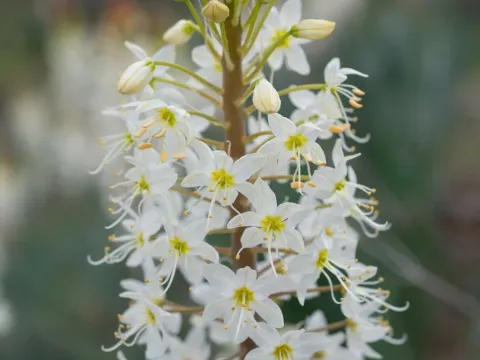
Eremurus
Eremurus M. B.
Sowing Eremurus seeds is a complex process as they possess low germination rates and require prolonged stratification. The optimal time for sowing is autumn, allowing seeds to pass through a natural cold cycle within the soil.
What the section contains

Eremurus
When propagated by seeds, flowering typically occurs only after 4 to 7 years of growth. While using fresh seeds can improve success, commercial producers often prefer vegetative division of the rhizomes for consistency and faster results.
Seeds should be sown in nutrient-rich soil at a depth of no more than 1.5 centimeters. Maintaining stable soil moisture is critical; drying out during the early stages is fatal to the young seedlings.
Seedlings should only be transplanted once they have reached a sufficient level of maturity, as the root system is extremely sensitive to mechanical damage. The best time for relocation is late summer when the plant is in its dormant phase.
Newly planted specimens require strict water management. During the first year, Eremurus develops a fragile root system and needs protection from aggressive weed competition to ensure adequate nutrient access.
Eremurus, a herbaceous perennial belonging to the Asphodelaceae family, originates from the arid regions of Central Asia and the Mediterranean. The plant thrives in open, sunny locations protected from strong winds that might break its tall flower spikes.
Well-drained soil is non-negotiable for this species, as waterlogging around the rhizomes quickly leads to rot. Ideally, the soil should be neutral to slightly alkaline with high organic matter content.
During the active vegetation period, Eremurus requires moderate watering, but once the above-ground foliage dies back in the summer, the soil must remain dry. This summer dormancy is a vital aspect of its agrotechnical cycle.
While many Eremurus varieties are hardy, those in regions with harsh, snowless winters require protective mulching with spruce branches or dry peat to prevent deep soil freezing around the root crown.
The plant is highly responsive to micronutrient levels during its growth phase. Balanced mineral fertilizers are recommended, but caution should be exercised with nitrogen levels to prevent overly succulent growth that attracts fungal pathogens.
The agricultural use of Eremurus centers on the floral industry and landscape design. For cut flowers, harvest occurs when approximately one-third of the florets have opened, ensuring a long vase life for the ornamental spikes.
For propagation purposes, harvesting the root systems takes place after the foliage has fully withered, usually in August. Rhizomes must be excavated with extreme care to keep the fragile, star-shaped roots intact.
Harvested rhizomes must be cleaned of soil and air-dried in a shaded, well-ventilated area. Direct sunlight must be avoided to prevent tissue desiccation and preserve the viability of the buds.
Storage is performed in a dry, cool place with constant airflow until the autumn planting window. Packing the rhizomes in sand or dry peat is standard practice to maintain stable humidity without encouraging rot.
During large-scale operations, mechanical harvesting requires precision to avoid damaging the growth buds. Any injury to the rhizome creates an entry point for infections, necessitating prompt fungicide treatment to prevent post-harvest losses.
Fungal diseases, specifically rust and root rots, are the primary threats to Eremurus, usually exacerbated by excessive soil moisture. Upon signs of infection, affected tissues must be removed immediately, followed by systemic fungicide application.
Insect pests, including thrips and aphids, can severely weaken the plant by feeding on the sap of leaves and flower spikes. Effective management involves applying broad-spectrum insecticides at the first sign of infestation.
Rodents represent a significant threat to dormant Eremurus plantings, as they often consume the fleshy rhizomes during winter. Mechanical deterrents and targeted baiting are recommended for site protection.
Mole crickets can cause extensive damage to young plants by feeding on roots in the soil. Regular cultivation of the soil and the placement of traps in inter-row spaces help mitigate this risk.
- Leaf rust
- Root rot
- Thrips
- Aphids
- Rodents