
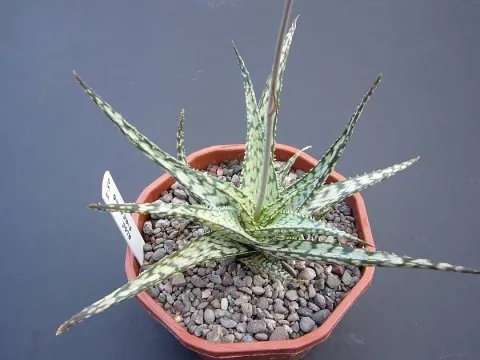
Aloe prinslooi
Aloe prinslooi
Aloe prinslooi is a perennial succulent plant belonging to the Asphodelaceae family. Known for its compact rosette of fleshy, often spotted leaves, this species is a distinct example of the xerophytic flora native to the arid regions of Southern Africa.
What the section contains
Aloe prinslooi
The plant has evolved in rocky habitats with well-drained soils, which dictates its primary agronomic requirement: perfect drainage. In a controlled cultivation environment, the potting mix should consist of mineral substrates like grit, sand, and perlite.
Light intensity is critical for the healthy development of Aloe prinslooi. It thrives under high-intensity light conditions, which are necessary to prevent etiolation and to maintain the plant's characteristic structural integrity and leaf coloration.
Climatic requirements involve a warm growing season followed by a cool dormant period during winter. Maintaining temperatures between 10–12°C during the resting phase is essential to trigger the plant's natural hormonal cycles and support future blooming.
Watering strategies must be strict: the soil should be allowed to dry out completely between sessions. Excessive moisture leads to rapid physiological decline and is the primary factor limiting the successful cultivation of this species in humid climates.
Root and crown rot are the most significant threats to Aloe prinslooi, usually caused by fungal pathogens resulting from overwatering or inadequate soil aeration. Once established, these infections are difficult to control without surgical intervention.
Mealybugs are common pests that infiltrate the tight leaf rosettes, feeding on sap and reducing the plant's vigor. Manual cleaning and systemic insecticidal treatments are typically required to manage and eliminate these infestations effectively.
Spider mites can become a problem in environments with low humidity. They damage the leaf epidermis, causing visible discolored patches and reducing the photosynthetic capacity of the succulent leaves, ultimately stunting the plant's growth.
Scale insects represent another challenge, as their protective waxy shields make them resistant to many contact pesticides. Careful removal and systemic chemical treatments are necessary to prevent large-scale colonization.
Preventive care focuses on maintaining good airflow and avoiding water contact with the central leaf rosette. Regular monitoring for early signs of stress or pest presence is the best strategy for long-term health of the crop.