
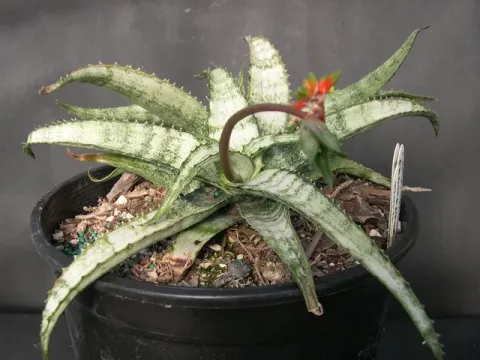
Aloe prostata
Aloe prostata
Aloe prostata is a rare species within the Asphodelaceae family, native primarily to the arid regions of Somalia. This succulent plant is characterized by its unique morphology and its ability to store moisture within its thick, fleshy leaves, allowing it to survive in extremely harsh desert conditions.
What the section contains
Aloe prostata
Successful cultivation of this species requires high levels of light exposure. In its natural habitat, the plant receives abundant direct sunlight, and therefore, when grown in greenhouses or indoor environments, it is essential to provide maximum light intensity, especially during the active growth season.
The growing medium must possess excellent drainage capabilities. Aloe prostata is highly sensitive to moisture retention in the root zone, which can rapidly lead to fungal decay and root rot. It is recommended to use specialized mixes containing coarse sand, perlite, or grit to ensure optimal aeration for the root system.
Temperature management is a critical factor for the plant's long-term health. The plant thrives in moderate warmth, but during the winter months, it requires a mandatory temperature drop to enter a state of physiological dormancy, which is necessary to stimulate future development and potential flowering.
Watering must be strictly regulated. During the summer, the plant should only be watered after the soil substrate has completely dried out, while in winter, irrigation should be almost entirely suspended. Poor water management is the most common cause of health deterioration in this species.
Fungal infections pose the most significant threat to this species, typically triggered by overwatering or poor air circulation. Root and stem rot are particularly aggressive issues that can destroy the plant in a very short amount of time if not addressed immediately.
Pests such as mealybugs and root mealybugs represent a serious concern as they feed on the plant's sap. Because these pests are often hidden, regular visual inspection of the root system and leaf axils is a vital part of standard agronomic care and maintenance.
Spider mites can become problematic in low-humidity conditions, leading to leaf yellowing and structural deformation. To prevent infestations, it is recommended to maintain hygiene in the growing area and, if necessary, perform light misting if humidity levels remain dangerously low.
For pest control in commercial or collection settings, systemic insecticides may be used. However, caution is advised as succulents can be highly sensitive to chemical burns on their tissues, necessitating the use of diluted concentrations.
If fungal infections are detected, damaged tissues must be promptly removed, followed by the application of broad-spectrum fungicides. Additionally, it is critical to replace the soil with a sterile substrate and adjust the watering schedule to prevent future occurrences.