
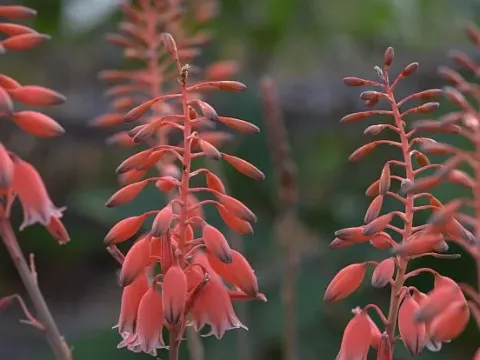
Aloe nutans
Aloe nutans
Aloe nutans is a perennial succulent species belonging to the Asphodelaceae family. It is recognized for its thick, fleshy leaves and shrub-like growth habit, which allows it to thrive in environments with irregular water availability.
What the section contains
Aloe nutans
Native to South Africa, the plant has evolved to withstand high intensity solar radiation and poor, rocky soils. For commercial or home cultivation, it requires a minimum of six hours of direct sunlight per day to maintain healthy tissue development.
The soil must be highly porous and well-draining, mimicking the natural grit of its native habitat. A mixture of loam, sand, and perlite is recommended to prevent water retention, as the roots are highly susceptible to moisture-related stress.
Climate requirements include a frost-free environment with temperatures ranging between 18°C and 25°C. In regions with cold winters, the crop must be managed in greenhouses to avoid tissue damage caused by freezing temperatures.
Agrotechnical care focuses on avoiding irrigation during the dormant season. Fertilization should be limited to a balanced, low-nitrogen formula applied only during the active growing phase in the spring and early summer.
Mealybugs are the primary pests affecting Aloe nutans, often clustering in the leaf axils where they sap nutrients. Early detection and treatment with insecticidal soaps can prevent widespread infestation.
Root rot is the most significant threat to plant health, usually caused by overwatering or poor drainage. This condition can rapidly destroy the root system and lead to the collapse of the succulent stems.
Spider mites can become a problem in enclosed environments with low humidity levels. Increasing airflow and maintaining optimal environmental conditions usually discourages the colonization of these pests.
Leaf spot fungi can develop if water accumulates in the central rosette of the plant. Proper irrigation technique, which delivers water directly to the soil, is essential for maintaining plant hygiene.
Monitoring the health of the base and roots regularly is vital for early detection of pathogens. Integrated pest management strategies using organic controls are preferred to ensure the quality of the plant for medicinal or cosmetic harvesting.