
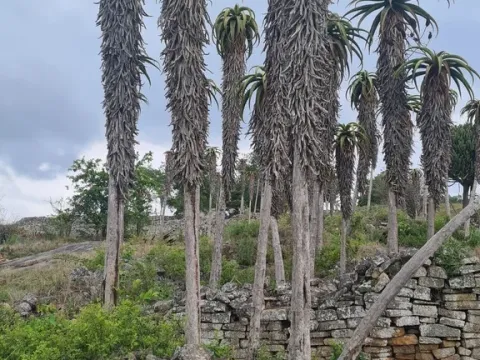
Aloe excelsa
Aloe excelsa
Aloe excelsa is a distinct tree-like succulent belonging to the Asphodelaceae family. Native to the rocky landscapes and savannas of Southern Africa, particularly Zimbabwe, this plant is well-adapted to harsh and arid environments.
What the section contains
Aloe excelsa
Botanically, this species is noted for its ability to grow a single, thick stem reaching heights of up to 6 meters. Its leaves are arranged in a dense, spreading rosette, characterized by a grey-green hue and robust, dark brown marginal teeth for protection.
Cultivation requires full sun exposure and gritty, well-draining soil. Providing a substrate that mimics its natural rocky habitat is essential for preventing root suffocation and ensuring the structural integrity of the plant.
Climatic requirements are strict: the plant thrives in warm, temperate to tropical zones and is sensitive to frost. In non-native climates, it must be sheltered in greenhouses or conservatories to survive winter temperatures below freezing.
Watering practices should follow the 'soak and dry' method, where the substrate is allowed to dry out completely between sessions. During the winter dormancy period, watering should be significantly reduced or suspended to prevent tissue rot.
The most prevalent threats to Aloe excelsa are fungal and bacterial rots, primarily induced by overwatering or poor drainage. Excess moisture in the root zone quickly compromises the plant's health.
Pests commonly associated with this succulent include mealybugs and scale insects. These parasites hide in the deep axils of the leaves, where they are difficult to detect during early stages of infestation.
Aphids can occasionally target the developing inflorescences, causing damage to flower buds and affecting the seed production process. Regular monitoring of the plant crown is essential during the flowering season.
For pest management, physical removal with isopropyl alcohol or application of horticultural oils is effective for light infestations. In severe cases, systemic insecticides may be necessary to protect the plant.
Preventative measures, such as maintaining good ventilation and using pathogen-free soil mixes, are the best defense against long-term decline. Constant awareness of environmental changes helps keep this large plant thriving for decades.