
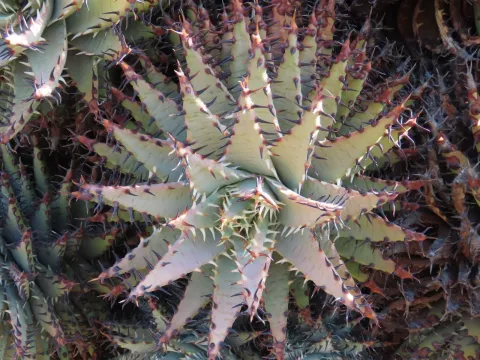
Aloe erinacea
Aloe erinacea
Aloe erinacea is a distinctive succulent species belonging to the Asphodelaceae family, endemic to the arid rocky regions of Namibia. Known for its slow-growing nature, it forms dense, spherical rosettes adorned with prominent, spiny margins that protect it from harsh environmental conditions.
What the section contains
Aloe erinacea
The cultivation of this species requires intense light exposure to maintain its compact form and vibrant leaf coloration. In indoor or greenhouse settings, it is essential to provide full sun and excellent air circulation to mimic its native desert environment.
Soil composition is critical for this species, necessitating a highly inorganic, free-draining medium. A mix containing coarse sand, grit, and perlite is ideal, ensuring that water passes through the pot rapidly without leaving the roots in a soggy environment.
Watering practices must be strictly controlled, following the "soak and dry" method with extended dry periods. During the dormant winter season, the plant should be kept almost completely dry to prevent root rot and mimic the natural drought cycles of the Namib desert.
Temperature management should account for significant diurnal fluctuations. While the plant can tolerate heat, it performs best when night temperatures drop, which supports its metabolic balance and helps prevent physiological stress during peak summer months.
Root rot is the most common threat to Aloe erinacea, usually resulting from overwatering or inadequate soil drainage. This condition progresses rapidly, leading to the collapse of the root system and eventual death of the succulent if left untreated.
Mealybugs are frequent pests that thrive in the crevices between the leaves. Because of the plant's dense structure, these insects can be difficult to eradicate without the use of systemic insecticides that are absorbed into the plant's tissues.
Scale insects can attach themselves to the leaves, draining nutrients and weakening the plant. Manual removal with an alcohol-soaked swab is often the first step in control, followed by targeted treatment if a larger infestation is detected.
Spider mites represent a risk, particularly in environments with poor airflow and excessively low humidity. Their presence is marked by fine webbing and stippling on the leaf surface, which can lead to permanent scarring.
Fungal leaf spot diseases may occur when environmental conditions are too humid. Proper hygiene, removing decaying plant matter from the pot, and improving air circulation are essential preventive measures to maintain the health of the collection.