
Aloe divaricata
Aloe divaricata
Description
Growing requirements
Aloe divaricata is a remarkable succulent shrub belonging to the Asphodelaceae family. Native to the island of Madagascar, this species is known for its wide-spreading branches, which give it a unique aesthetic appeal in both botanical collections and xeriscaped garden designs.
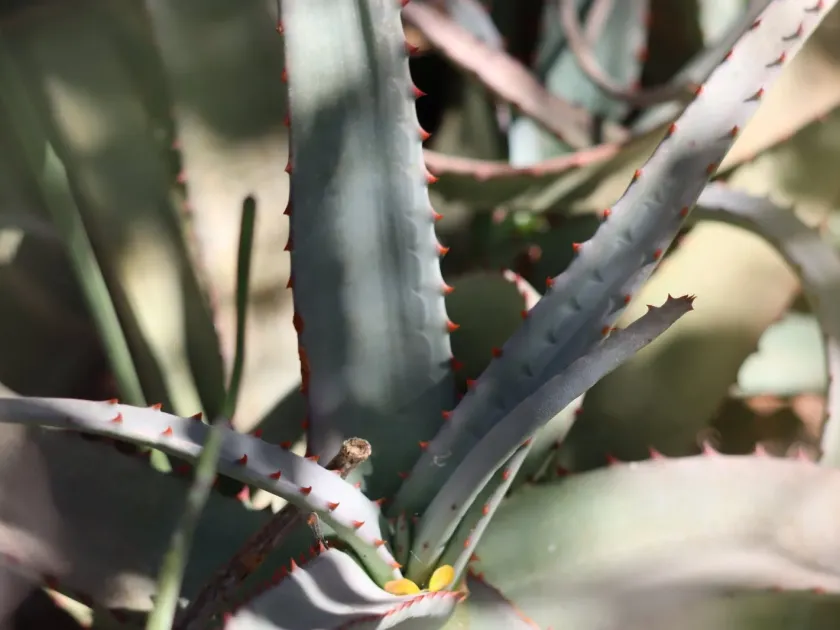
Botanically, the plant features a woody stem that can grow to significant heights over time. Its succulent, grey-green leaves are arranged in terminal rosettes, with serrated margins that provide a striking texture. It thrives in arid environments and is highly adapted to periods of water scarcity.
The plant requires full sun exposure to maintain its compact growth form and vibrant coloration. If light levels are insufficient, the plant will become etiolated, leading to weak stems and increased susceptibility to physiological disorders.
Soil requirements for Aloe divaricata are specific: a fast-draining, gritty medium is essential. A mixture composed of coarse sand, perlite, and a small portion of organic matter provides the best balance of nutrients and necessary aeration for the root system.
Irrigation practices must strictly follow the seasonal cycles of the plant. During the active growth phase, deep but infrequent watering is recommended, while the dormant winter season requires almost complete dryness to mimic the natural fluctuations of its native climate.
Main diseases and pests
The most significant agricultural threats to Aloe divaricata are fungal pathogens, specifically those causing root rot and stem rot. These occur primarily due to poor soil drainage or excessive irrigation, which damages the root tissues and allows opportunistic bacteria to invade.
Pest pressure is primarily driven by mealybugs and spider mites. These insects thrive in dry, stagnant environments, feeding on the succulent sap and causing yellowing or scarring of the leaf surfaces, which significantly reduces the plant's ornamental value.
To prevent these infestations, it is crucial to ensure good air circulation around the plants. Periodic inspections of the leaf axils are necessary, as mealybugs often congregate in these protected areas, hidden from casual observation.
If an infestation occurs, manual removal or the application of specialized horticultural oils or systemic insecticides is recommended. Care should be taken to avoid products that contain high amounts of petroleum, which can burn the succulent leaves.
In cases of severe rot, the only viable intervention is the removal of the decayed parts, followed by a period of air-drying to allow the tissue to callous before replanting into a sterile, dry, sandy substrate.