
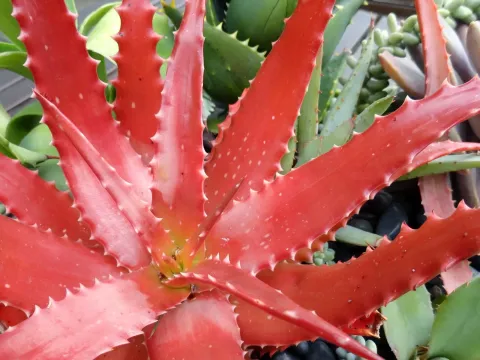
Aloe dorotheae
Aloe dorotheae
Aloe dorotheae is a compact succulent perennial from the Asphodelaceae family, native to Tanzania. It is highly valued for its striking appearance, characterized by a low-growing rosette of glossy leaves that transition into a vibrant reddish-brown hue when exposed to direct sunlight.
What the section contains
Aloe dorotheae
Proper light exposure is the most critical requirement for this species. To maintain its distinct color and compact growth habit, the plant needs significant amounts of bright, direct light. In lower light conditions, the plant will lose its decorative pigments and revert to a dull green color.
The ideal temperature range for Aloe dorotheae is between 20°C and 28°C during the active growing season. As a subtropical succulent, it is highly sensitive to frost and freezing temperatures, which can severely damage its water-rich tissues and lead to plant loss.
Regarding soil, the plant requires a highly porous and well-draining substrate. A mix of standard potting soil, coarse sand, and perlite is recommended to ensure that excess water drains quickly, thereby preventing the risk of root rot which is common in succulents.
Watering should be approached with caution: only water the plant when the soil has completely dried out. During the winter dormancy phase, watering should be significantly reduced to allow the plant to rest, which is essential for healthy long-term growth and seasonal blooming.
Aloe dorotheae is cultivated exclusively for ornamental purposes, commonly used in rock gardens, indoor collections, and as a decorative potted plant. It does not hold significance as an industrial agricultural crop for medicinal or cosmetic harvesting.
The yield in a commercial nursery context is measured by the propagation rate, specifically the production of offsets (pups) at the base of the parent plant. Under optimal conditions, a healthy mature plant can produce several offsets annually, allowing for consistent stock replenishment.
Marketable quality is determined by the size of the rosette and the depth of the leaf coloration. Commercial growers often utilize specialized LED lighting systems to optimize these characteristics and accelerate the production cycle of nursery-ready plants.
As a container-grown culture, the plant requires periodic repotting to accommodate root expansion and fresh soil nutrients. This practice maintains the health and aesthetic vigor of the specimens throughout their lifecycle.
While not a food crop, the cultivation of this species is a niche but rewarding branch of ornamental horticulture. Its ability to thrive in controlled environments makes it a popular choice for succulent enthusiasts worldwide.
The primary threat to Aloe dorotheae is the development of fungal rot, typically caused by overwatering or poor soil drainage. Once rot sets in, it spreads through the succulent tissue rapidly, making it difficult to save the plant once the roots are compromised.
Pests such as mealybugs and spider mites are frequent invaders, especially in dry, indoor environments. These insects hide between the leaves and feed on the plant's sap, which can cause stunted growth, leaf deformation, and the spread of secondary viral infections.
Poor air circulation combined with high humidity can lead to powdery mildew on the foliage. To mitigate this risk, it is important to provide good ventilation and avoid getting water directly into the center of the leaf rosette during irrigation.
Mechanical damage to the succulent leaves can create entry points for pathogens. When handling or repotting, care must be taken to avoid snapping the leaves or crushing the sensitive root system, as damaged tissues are prone to immediate infection.
Effective management requires a preventive approach, including routine inspections of the plant's base and the underside of the leaves. Early detection and isolation of any affected plants are key to maintaining a healthy and pest-free succulent collection.