
Aloe distans
Aloe distans
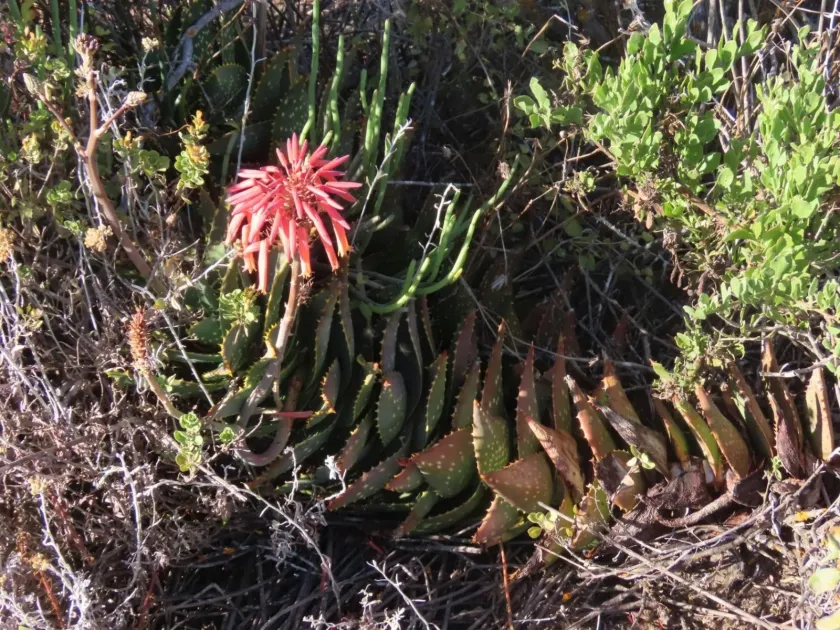
Description
Growing requirements
Aloe distans is a perennial succulent species belonging to the Asphodelaceae family. It is native to the coastal regions of the Western Cape in South Africa, where it thrives in rocky, well-drained soils.
The plant is botanically recognized by its trailing or procumbent stems that can grow quite long, producing dense rosettes of fleshy, blue-green leaves adorned with distinct, hardened spines along the margins.
To cultivate this species effectively, one must provide a sunny environment with plenty of direct exposure. Adequate light is essential to prevent etiolation, which results in weak, elongated stems that lack the typical compact appearance.
Soil requirements are strictly focused on drainage. A specialized succulent mix containing sand, gravel, and perlite is necessary to prevent the accumulation of excess moisture, which can lead to rapid decay of the roots.
Temperature management is straightforward: the plant prefers warm conditions and is intolerant of frost. It is best suited for zones where temperatures remain well above freezing, making it an ideal choice for greenhouses or sunny indoor windowsills.
Main diseases and pests
Common pests affecting Aloe distans include mealybugs, which often infest the crevices between the leaves. These pests are resilient and require consistent monitoring or treatment with horticultural oils or insecticidal soaps.
Fungal infections, primarily root rot, represent the most significant threat to this species. This is usually caused by excessive moisture and poor air circulation around the plant's base during the colder months.
Spider mites can also be a challenge, particularly in environments with extremely low humidity. They weaken the plant by feeding on its tissues, leaving characteristic yellow spots on the foliage.
Successful management of threats involves preventive care, such as ensuring proper soil aeration and avoiding overhead watering that could leave water trapped in the leaf rosettes for extended periods.
In cases of severe infestation or rot, removing the affected parts and applying systemic treatments is recommended to prevent the total loss of the plant structure.