
Aloe broomii
Aloe broomii
Aloe broomii is a perennial succulent plant belonging to the Asphodelaceae family. In its natural habitat, it grows in the mountainous regions of South Africa, preferring rocky slopes and open, sun-drenched locations.
What the section contains
Aloe broomii
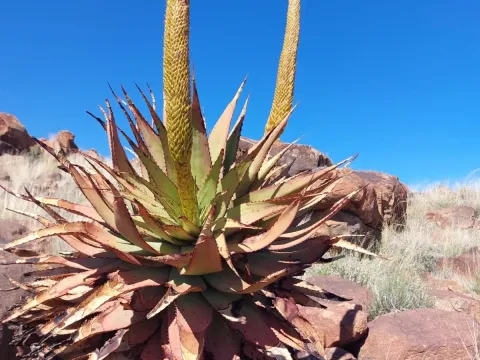
The plant features a distinct rosette of dense, fleshy leaves that have a grey-green hue and are covered with small spines along the edges. During the flowering period, it produces a tall, dense inflorescence resembling a thick spike with unusual bracts hiding the small flowers.
This species is extremely demanding regarding light exposure; for optimal development, it requires direct sunlight throughout the entire day. In conditions of insufficient light, the plant loses its compact shape and decorative appeal, becoming elongated and weak.
Aloe broomii has high drainage requirements for the soil substrate. The ideal growing medium should be sandy or stony, with a low percentage of organic matter, which effectively prevents moisture stagnation and the development of root rots.
The crop is highly drought-tolerant; however, to maintain its vitality during the summer period, it requires moderate watering, specifically avoiding wetting the leaf rosette, as moisture trapped in the center of the plant rapidly leads to decay.
The primary threat to this species is excessive air and soil moisture. If watering practices are ignored, the root system is quickly compromised by fungal rots, which are practically incurable in advanced stages.
Among pests, mealybugs pose the greatest danger as they hide within the axils of the fleshy leaves. They extract sap from the plant, weakening its immune system and creating a favorable environment for secondary infections.
Scale insects can also infest the crop, forming dense colonies on the leaf surfaces. To combat them, it is recommended to use systemic insecticides or carefully remove the pests with a cotton swab soaked in an alcohol solution.
Spider mites may appear during periods of extremely low humidity combined with high temperatures, leading to leaf deformation. Regular plant inspections and strict adherence to temperature regimes are the best methods for prevention.
Poor ventilation in enclosed spaces triggers the appearance of mold fungi. Ensuring a constant flow of fresh air significantly reduces the risk of such pathologies developing in succulent collections.