
Aloe bellatula
Aloe bellatula
Description
Growing requirements
Aloe bellatula is a miniature succulent plant belonging to the Asphodelaceae family. Native to the central highlands of Madagascar, this species is well-adapted to rocky habitats where it experiences distinct seasonal variations in humidity and precipitation.
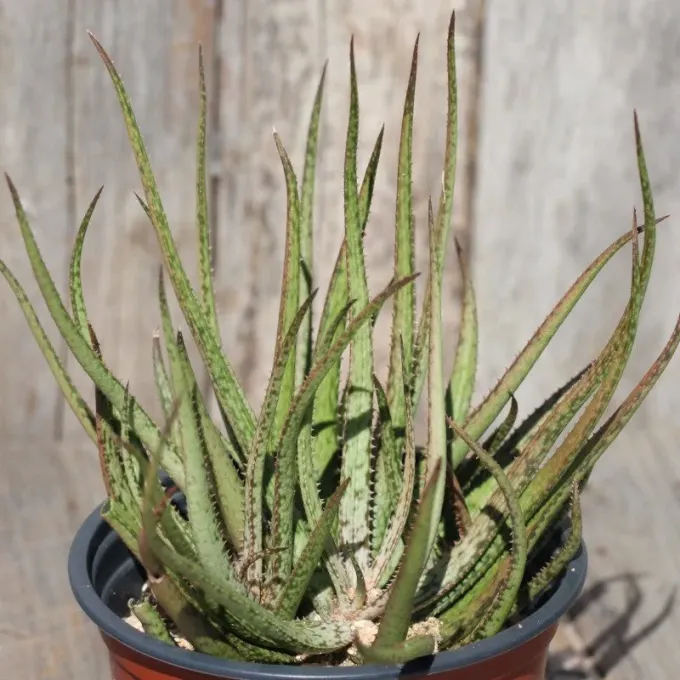
The plant features a tight, low-growing rosette of dark green, fleshy leaves. The foliage is characteristically spotted with white tubercles, providing a unique aesthetic texture. During the blooming season, it produces elegant, coral-pink bell-shaped flowers on slender stalks.
Cultivation requirements necessitate bright, indirect sunlight to maintain the compact growth habit. Exposure to harsh afternoon sun should be avoided to prevent foliar scorching. Proper ventilation is essential to mimic its natural environment and discourage fungal growth.
The soil substrate must be highly porous and fast-draining. A typical succulent mix comprising pumice, coarse sand, and a small portion of organic matter is ideal. The use of a pot with large drainage holes is mandatory to ensure the root system never sits in stagnant water.
Watering practices are governed by the cycle of dormancy and growth. During the spring and summer, the plant should be watered only when the soil is completely dry. In autumn and winter, watering should be significantly reduced to allow the plant to undergo a resting phase at lower temperatures.
Main diseases and pests
Root rot, resulting from overwatering or inadequate soil aeration, is the most critical threat to the longevity of Aloe bellatula. Signs include mushy leaf bases and a general loss of plant vigor, which often necessitates emergency repotting into dry, sterilized substrate.
Mealybugs are common pests that tend to cluster in the leaf axils, where they feed on plant sap. These pests are protected by their white, waxy secretions, making them difficult to detect until they have established a large colony that stunts the plant's growth.
Spider mites can also become problematic if the indoor environment becomes too hot and dry for prolonged periods. These mites damage the epidermis of the leaves, resulting in unsightly discolored patches and reduced photosynthetic capacity of the succulent.
Preventative maintenance involves careful watering routines and regular inspections of the foliage. Avoiding overhead watering is vital, as moisture trapped in the center of the rosette can lead to rapid decay of the apical meristem, which is often fatal for the specimen.
In case of pest infestation, immediate application of horticultural soap or systemic insecticides is recommended. Care should be taken to ensure the treatment is compatible with succulent tissue to avoid chemical burns during the recovery process.