
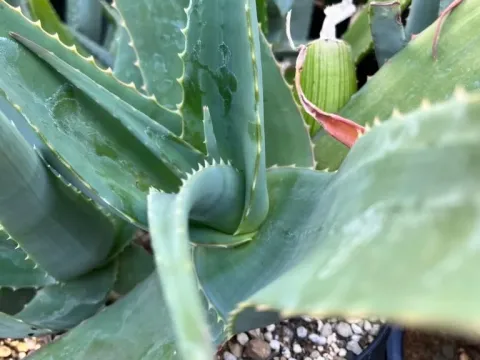
Aloe canarina
Aloe canarina
Aloe canarina belongs to the Asphodelaceae family and is recognized as a distinctive succulent species. Like many of its relatives, it has evolved to survive in arid environments through specialized water-storing tissues in its leaves.
What the section contains
Aloe canarina
Originating from the rugged terrains of Southern Africa, this plant thrives in rocky or sandy substrates with excellent drainage. It is not adapted to heavy clay soils that retain excess moisture for extended periods.
The cultural requirements for Aloe canarina include high light exposure. In indoor settings, placing the plant near a southern window is essential to maintain its compact form and vibrant leaf structure.
Temperature management is crucial as the species prefers warm, stable conditions. While it can withstand some heat, it must be protected from frost, which can cause internal cell damage to its fleshy leaves.
Watering strategy should focus on the "soak and dry" method. It is safer to underwater this succulent than to overwater it, as the roots are highly susceptible to rot when kept in damp conditions.
The most significant threat to Aloe canarina is root rot, typically caused by improper watering practices or poorly draining soil. If the soil remains saturated, the plant's structural integrity will quickly decline.
Pests like mealybugs often hide in the tight spaces between leaves. They feed on the plant's sap, leading to weakened growth and a higher susceptibility to secondary infections.
Spider mites can also become a problem in low-humidity environments. Regularly cleaning the foliage with a soft brush or gentle water spray helps in early detection and physical removal of these pests.
Fungal leaf spot is another concern, often appearing as dark, sunken lesions on the leaves. It usually occurs when airflow is restricted or humidity levels fluctuate too drastically.
Maintaining a clean cultivation environment, including removing decaying plant debris and ensuring proper spacing between plants, is the primary line of defense against most common diseases.