
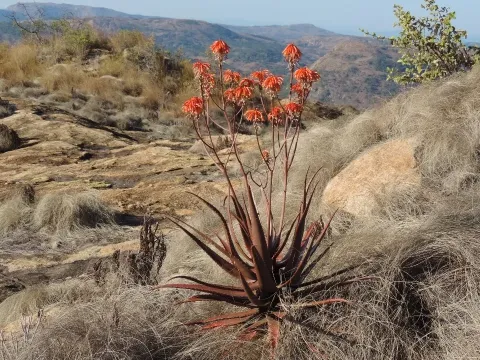
Aloe cameronii
Aloe cameronii
Aloe cameronii is a succulent plant belonging to the Asphodelaceae family. Native to the rocky slopes and dry savannas of Zimbabwe, Malawi, and Mozambique, this species has evolved to thrive in harsh, nutrient-poor environments with limited water availability.
What the section contains
Aloe cameronii
The defining botanical feature of this culture is the dramatic transformation of its leaf color. When exposed to intense direct sunlight, the leaves transition from green to a striking copper, bronze, or bright red, which serves as a protective adaptation against UV radiation.
For successful agricultural or horticultural production, the species requires a well-draining, gritty soil medium. A mixture based on coarse sand, pumice, and minimal organic matter is ideal to ensure that excess water drains rapidly, preventing root decay.
This crop is highly thermophilic and requires significant solar exposure. In indoor or greenhouse cultivation, it is essential to place the plants in areas receiving maximum sunlight. Without adequate light intensity, the plant loses its distinctive vibrant coloration.
Watering requirements follow a strictly seasonal cycle. During the active growth phase, watering should be thorough but infrequent, allowing the substrate to dry out completely. In winter, the plant enters a period of dormancy, necessitating minimal irrigation to prevent physiological stress.
The primary threat to the health of Aloe cameronii is fungal pathogen infection, typically caused by overwatering or poor ventilation. Root rot is particularly destructive and can lead to the rapid death of the entire plant if conditions are not corrected.
Mealybugs are the most common pests that infest this culture. These insects thrive in the tightly packed leaf bases, where they feed on the plant sap. Their presence is often marked by a white, cottony secretion that adheres to the succulent foliage.
Scale insects also pose a significant risk, as they attach themselves to the leaves and create protective waxy coverings. If left untreated, both mealybugs and scale can severely weaken the plant, leading to stunted growth and secondary infections.
Poor circulation and high humidity in the growing environment can further exacerbate susceptibility to pests and diseases. Ensuring adequate space between individual plants and maintaining moderate humidity levels are essential preventative measures.
To manage these threats, integrated pest management practices should be employed, prioritizing early detection and manual removal. When chemical interventions are necessary, choosing appropriate systemic insecticides is vital to avoid damaging the succulent tissue.