
Aloe belavenokensis
Aloe belavenokensis
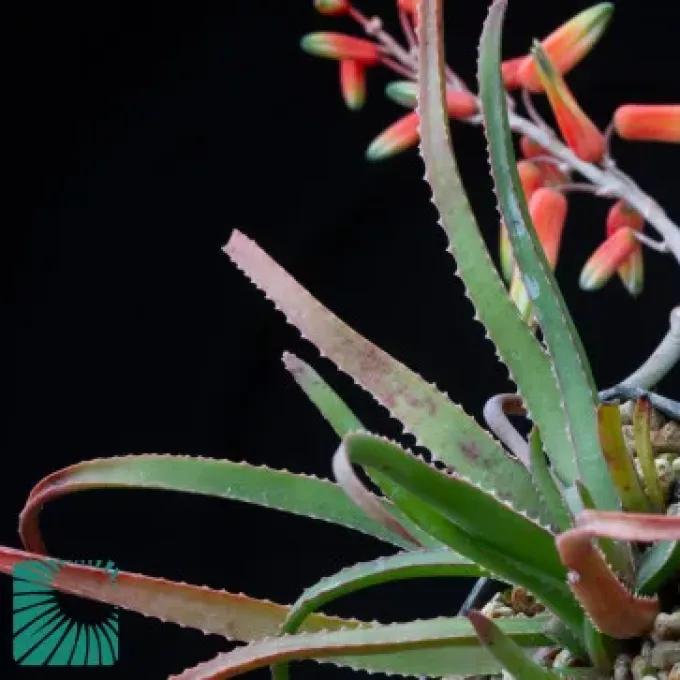
Description
Growing requirements
Aloe belavenokensis is a distinct succulent species belonging to the Asphodelaceae family. It is a rare perennial plant native to the arid, rocky terrains of Madagascar, where it has evolved to thrive in harsh environments.
The plant exhibits a slow growth rate and forms compact rosettes of fleshy leaves. These leaves serve as reservoirs for water, allowing the plant to sustain itself during prolonged periods of drought in its natural habitat.
Optimal growth requires high levels of solar radiation. In agricultural or horticultural settings, placing the plant in a position with full sun exposure is essential to maintain its aesthetic form and physiological health.
The soil must be exceptionally porous, simulating the rocky substrates of its origin. A mix comprising coarse sand, grit, and minimal organic matter is necessary to facilitate rapid drainage and aeration of the root system.
Agricultural practices focus on mimicking the climate of Madagascar. Irrigation should be performed only when the soil is completely dry, and the plant must be protected from frost and prolonged cold, which can cause tissue collapse.
Main diseases and pests
The primary threat to Aloe belavenokensis is root rot, induced by waterlogging or inadequate drainage. Preventing moisture accumulation in the heart of the rosette is crucial to maintain plant vitality.
Mealybugs represent a significant pest threat, often residing in the leaf axils. These pests are difficult to detect early and can cause substantial damage if left unchecked, potentially leading to fungal secondary infections.
Fungal pathogens can arise if the ambient humidity is too high or if the plant remains in a stagnant atmosphere. Improving ventilation is the most effective cultural method to mitigate these risks.
Care must be taken when applying chemical controls, as the waxy cuticle of the leaves can be damaged by solvents or aggressive concentrated formulas common in standard pesticides.
Periodical inspections of the substrate surface and the base of the stem are recommended to catch potential issues early. Keeping the area surrounding the base clean and free of dead debris reduces the risk of pest harborage.