
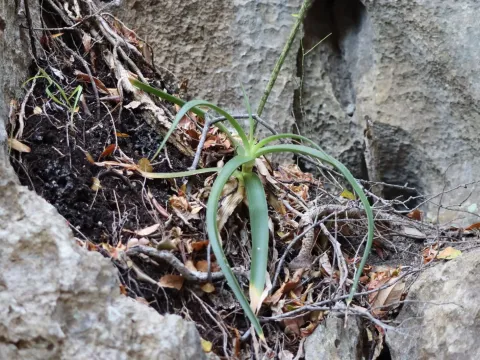
Aloe bosseri
Aloe bosseri
Aloe bosseri is a distinct succulent species belonging to the Asphodelaceae family, endemic to the island of Madagascar. It is a highly specialized plant adapted to survive in harsh, arid rocky environments, making it a sought-after subject for botanical collections.
What the section contains
Aloe bosseri
The plant grows in compact rosettes, characterized by thick, succulent leaves that are often tinged with dark colors. These structures are designed to store water efficiently, allowing the plant to withstand long periods of drought, which is a fundamental biological trait of the species.
Optimal growth requires a well-draining substrate typically comprised of coarse sand, perlite, and volcanic rock. Ensuring proper drainage is essential for the health of the root system, as Aloe bosseri is highly susceptible to tissue rot in heavy or poorly draining soils.
Regarding climate, the plant thrives in warm environments with high light intensity. It is best suited for locations with bright, indirect, or direct sunlight for most of the day, which maintains the density of the rosette and prevents the leaves from becoming etiolated.
Agrotechnical management emphasizes minimal watering. The substrate should be allowed to dry out completely between waterings to mimic the natural fluctuations in rainfall characteristic of the plant's native habitat. Excessive moisture during cooler periods can lead to rapid physiological decline.
The primary threats to Aloe bosseri are fungal infections that manifest as stem or root rots. These diseases are almost exclusively caused by overwatering or the use of substrates that retain moisture for too long, creating an environment that favors pathogen proliferation.
Pest management involves monitoring for mealybugs and spider mites, which can hide in the crevices of the leaf rosettes. Preventive measures include ensuring good airflow around the plants and using systemic pesticides if an infestation is detected, ensuring that the roots are not stressed by the chemical treatment.