
Aloe camperi
Aloe camperi
Aloe camperi is a perennial succulent species belonging to the Asphodelaceae family. This plant is native to the highlands of Ethiopia and Eritrea, where it naturally inhabits rocky slopes and arid landscapes, demonstrating high resilience to drought.
What the section contains
Aloe camperi
Regarding climatic requirements, Aloe camperi thrives in bright, direct sunlight. It is sensitive to extreme cold and must be kept in environments where temperatures do not drop below freezing, making it ideal for arid regions or indoor greenhouse cultivation.
The soil requirements are strict: the medium must be highly porous and inorganic. A mix of pumice, coarse sand, and a small amount of loamy soil is optimal to prevent any water retention that could lead to physiological stress in the root system.
Agrotechnical management involves a "soak and dry" watering method. During the active growing season, the plant should be watered only when the soil has completely dried out. In the winter dormancy period, watering should be significantly reduced or suspended to prevent rot.
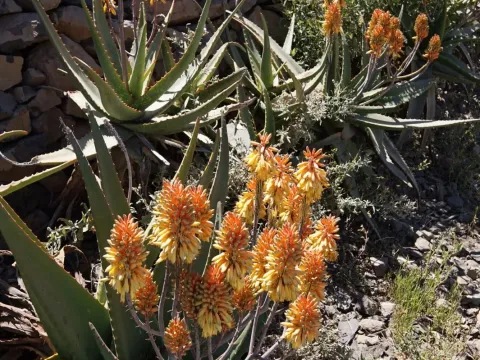
Botanically, it forms dense rosettes of fleshy, lanceolate leaves, typically deep green with marginal serrations. The plant produces tall inflorescences bearing orange to coral-red tubular flowers, which are highly attractive to pollinators in their native environment.
The primary threat to Aloe camperi in cultivation is root rot, typically caused by poor drainage or overwatering. This condition manifests as softening of the leaf base and yellowing of the foliage, often progressing to total plant collapse.
Mealybugs constitute a significant pest threat, often hiding in the crevices between leaves. They consume sap and excrete honeydew, which can encourage the growth of sooty mold, negatively impacting the plant's photosynthesis and overall vigor.
Spider mites can also be problematic, particularly in dry and poorly ventilated air. These minute pests cause stippling and discoloration of the leaf epidermis, which can be mitigated by improving air circulation and occasionally misting the surrounding area.
Fungal leaf spot diseases may occur if the ambient humidity remains consistently too high. Ensuring proper air movement and avoiding water accumulation in the center of the leaf rosette are essential preventative measures against these pathogens.
In addition to pests, improper light levels can lead to etiolation, where the plant loses its compact form and becomes weak. Maintaining adequate light intensity is crucial for preserving the architectural integrity and natural health of the Aloe camperi.