
Aloe brunneostriata
Aloe brunneostriata
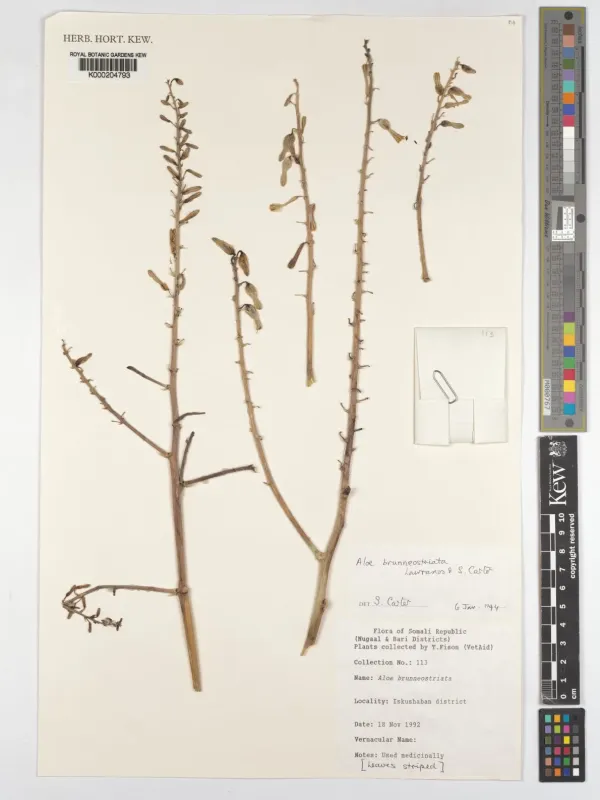
Description
Growing requirements
Aloe brunneostriata is a unique succulent plant belonging to the Asphodelaceae family. This species is endemic and grows in limited natural habitats, making it a highly prized specimen for enthusiasts and botanical collections.
To ensure healthy development, the plant requires specific environmental conditions that mimic arid subtropical regions. It thrives in bright, indirect sunlight, as intense midday heat can scorch its fleshy leaves.
The growing medium for this species must have high aeration and excellent drainage. It is recommended to use specialized cactus and succulent potting mixes, supplemented with coarse sand or perlite to prevent root rot.
Temperature management is critical: the plant prefers moderate warmth during the active growing season and a cooler, dormant period during the winter. Adequate air circulation is essential to prevent fungal issues associated with stagnant air.
Cultivation practices involve infrequent but thorough watering, allowing the soil to dry out completely between applications. During the winter dormancy phase, irrigation should be significantly reduced to maintain the plant's metabolic balance.
Main diseases and pests
Fungal infections, primarily caused by waterlogged soil and high humidity, pose the greatest threat to this species. Root rot is a common and aggressive condition that requires immediate action if detected.
Common succulent pests, such as mealybugs and spider mites, can infest the plant, especially if quarantine measures are not followed. In such cases, systemic insecticides or targeted biological treatments should be employed.
Deviations from standard agricultural practices often manifest as unsightly leaf spots or necrosis. Preventing these issues relies on maintaining strict watering cycles and using sterile, well-draining potting substrates.
Sudden temperature fluctuations can induce significant stress, making the plant more susceptible to opportunistic pathogens. A stable environment is key to preserving the plant's natural resistance and growth vigor.
Regular inspections of the base, stem, and leaf undersides are recommended to detect pests or early signs of decay. Early intervention remains the most effective strategy for ensuring the long-term survival of the plant.