
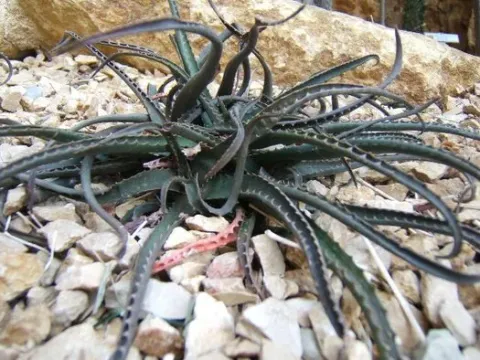
Aloe boiteaui
Aloe boiteaui
Aloe boiteaui is a rare succulent species belonging to the Asphodelaceae family. It is native to the island of Madagascar, where it thrives in rocky, arid, and well-drained mountain habitats.
What the section contains
Aloe boiteaui
The plant is known for its compact rosettes of fleshy, blue-green leaves. These leaves are structurally adapted to store water, allowing the plant to survive long periods of drought in its natural environment.
For successful cultivation, Aloe boiteaui requires bright, indirect light. While it is sun-loving, prolonged exposure to harsh afternoon sun in confined spaces can cause the leaf tissues to bleach or scorch.
The growing medium must be highly porous. A standard succulent potting mix, amended with extra perlite or coarse sand, is essential to ensure that water drains away quickly from the root system.
Temperature management is key to keeping the plant healthy. It performs best between 20°C and 25°C during the growing season and requires a cooler, dry rest period during the winter months.
The most significant threat to Aloe boiteaui is overwatering, which quickly leads to root rot. If the soil remains soggy for an extended period, the roots will decay, eventually killing the plant.
Mealybugs are the most common pests affecting this species. They hide in the tight spaces between leaves, and their presence is usually indicated by small patches of white, cotton-like substance.
Scale insects can also infest the leaves, appearing as small, brown, circular bumps. They suck sap from the plant and can cause stunted growth if not removed promptly with an appropriate insecticide.
Fungal infections, such as leaf spot, can occur if there is poor air circulation and high humidity around the plant. Ensuring the plant is kept in an area with good airflow is a vital preventative measure.
To keep the plant thriving, it is recommended to conduct regular checks of the underside of the leaves. Early detection of any pest infestation or signs of rot allows for quick intervention and successful recovery.