
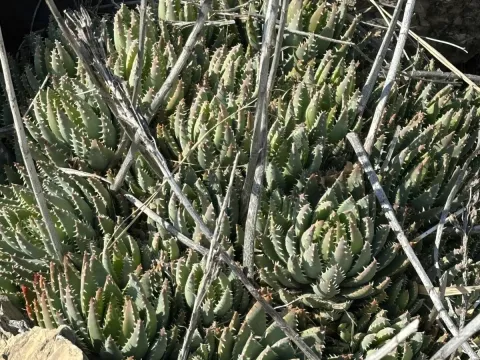
Aloe brevifolia
Aloe brevifolia
Propagation of Aloe brevifolia is most efficiently performed by separating offsets or pups that grow around the mother plant. This method ensures the new plants inherit all the characteristics of the parent, making it ideal for maintaining a collection.
What the section contains
Aloe brevifolia
When detaching the offsets, it is crucial to use a sharp, sterile blade. After cutting, the offsets should be left in a dry, shaded place for one or two days to allow the cut surface to callus. This prevents infection and rotting upon planting.
The planting medium should be a specialized mix for succulents, characterized by its high drainage capacity. Placing the offsets in such a mix, without burying the crown too deeply, allows for optimal root development within a few weeks.
While seed sowing is possible, it is a slower process primarily used for breeding purposes. Seeds require a consistent temperature of around 22–25 degrees Celsius and high humidity during the germination phase to ensure a successful start.
New plants require a period of establishment with bright, indirect light. Once the roots are established, they can be gradually moved to a position that receives more direct sunlight to encourage healthy, compact growth.
Aloe brevifolia belongs to the Asphodelaceae family and is native to the Western Cape in South Africa. As a plant adapted to rocky slopes and dry climates, it demands specific conditions to thrive in cultivation.
This species requires high light intensity to maintain its characteristic compact, rosetted form. Insufficient light results in elongated leaves and a loss of the deep blue-green or reddish hues that the plant develops when properly exposed to the sun.
Soil requirements for this succulent focus on porosity. A mix of pumice, perlite, and coarse sand with a small portion of potting soil is ideal. The plant's roots must breathe, and any water that remains stagnant near the roots for too long will lead to decline.
Watering should follow the soak-and-dry method: water the plant thoroughly, then allow the soil to dry out completely before the next watering session. In winter, water should be restricted even further as the plant enters a state of dormancy.
Temperature tolerance ranges from warm summer days to cool winter nights. While it can handle minor fluctuations, it is best kept away from frost, as the high water content in its fleshy leaves makes it susceptible to freezing damage.
In a horticultural context, the yield of Aloe brevifolia is measured by the number of healthy, genetically consistent offsets produced by a mature specimen. A well-cared-for plant can produce several offsets annually, allowing for significant propagation success.
Commercial nurseries value this plant for its aesthetic versatility. It is a staple in succulent gardens and rockery designs where it can form extensive ground-covering colonies, effectively maximizing the available space in a garden layout.
The plant's overall productivity depends on the frequency of fertilization and the quality of the light it receives. During the peak growing season, using a balanced succulent fertilizer at half-strength can boost the development of new rosettes.
While it is not a high-yield industrial crop like some other Aloe species, Aloe brevifolia serves as a vital component in the ornamental trade, particularly for collectors who prioritize rare and attractive succulent forms.
Quality control in nursery environments is focused on the symmetry of the rosettes and the health of the leaf tips. Regular grooming and proper spacing are necessary to ensure that every individual plant reaches its full ornamental potential.
The primary threat to Aloe brevifolia is root rot, which is almost always a result of overwatering or inadequate soil drainage. Rot manifests as a darkening of the base, causing the leaves to become soft and translucent before they fall away.
Mealybugs are the most common pests, often settling in the tight crevices between the leaves where they are difficult to spot. Their presence is usually indicated by white, cotton-like masses, which should be treated immediately with rubbing alcohol or systemic insecticides.
Spider mites can also be a nuisance, especially in environments with very low humidity. These pests feed on the cell sap, resulting in discolored, stippled leaves that eventually turn brown and dry up if left unmanaged.
Lack of proper airflow is another significant issue. In stagnant conditions, the risk of fungal pathogens increases, making it essential to provide adequate spacing and ensure that the growing environment is well-ventilated.
- Check for pests during every watering session.
- Ensure the soil is completely dry before re-watering.
- Avoid wetting the center of the rosette to prevent internal decay.