
Schefflera impressa
Schefflera impressa
Description
Growing requirements
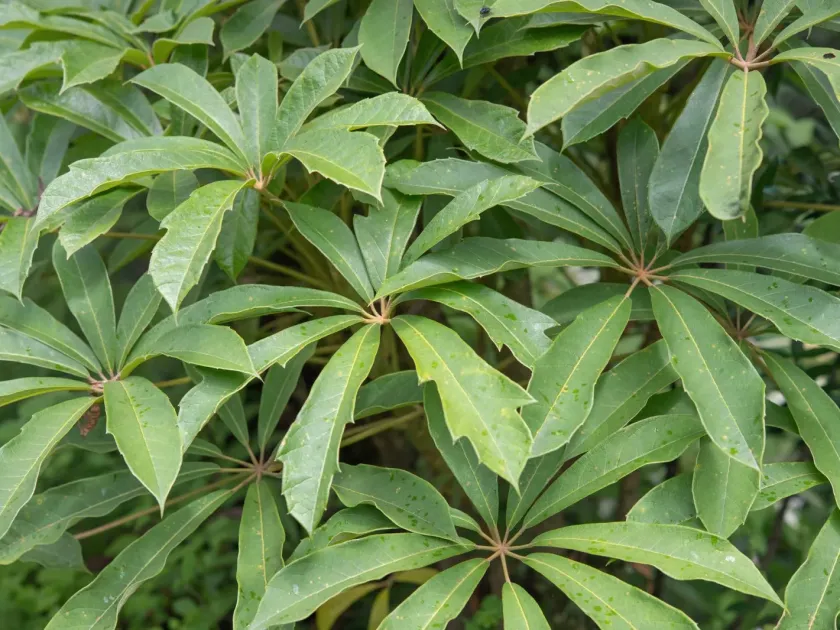
Schefflera impressa is a distinguished evergreen woody species belonging to the Araliaceae family. It is widely recognized for its elegant, palmately compound leaves that provide a sophisticated structural element to botanical collections or indoor landscapes.
Originating from the mountainous regions of the Himalayas and parts of Southeast Asia, this species thrives in cooler, higher-altitude environments compared to other members of its genus. It prefers a temperate climate where it can avoid the harsh heat of low-lying tropical areas.
Successful cultivation requires bright, filtered light. While the plant can tolerate some morning sun, intense afternoon direct light must be avoided to prevent foliar scorching. Consistent, moderate light levels encourage healthy leaf development and deep coloration.
The ideal growing medium should be a well-draining, nutrient-rich potting mix. A combination of peat-based substrate, bark, and perlite ensures adequate aeration around the root zone, which is crucial for preventing the saturation issues often encountered in container gardening.
Watering requirements are moderate; the soil surface should be allowed to dry slightly between irrigation sessions. Maintaining optimal air humidity is beneficial, especially during the growth season, as it helps preserve the glossy texture and health of the foliage.
Main diseases and pests
Root rot, primarily caused by waterlogged soil, remains the most significant threat to the survival of Schefflera impressa. Poor drainage management quickly weakens the root system, making the plant highly susceptible to secondary fungal pathogens.
Spider mites are a persistent pest concern, particularly in indoor environments with dry heating during winter months. These tiny arachnids thrive in low-humidity conditions, causing stippling and eventual chlorosis on the leaves if left untreated.
Scale insects present another challenge, as they attach themselves to stems and the undersides of leaves, feeding on plant sap. Their hard protective shells make them difficult to remove manually, often requiring the use of specialized systemic insecticides.
Fungal leaf spot diseases can emerge if the canopy is not provided with enough air circulation. Persistent moisture on foliage combined with stagnant air creates an environment suitable for pathogen proliferation, resulting in necrotic spots.
Effective management includes routine inspection, maintaining proper spacing between plants, and applying prophylactic treatments if pest pressure increases. Keeping the plant healthy through optimal nutrition and light exposure naturally bolsters its resistance to various biotic stressors.