
Amber Schefflera
Schefflera succinea
Description
Growing requirements
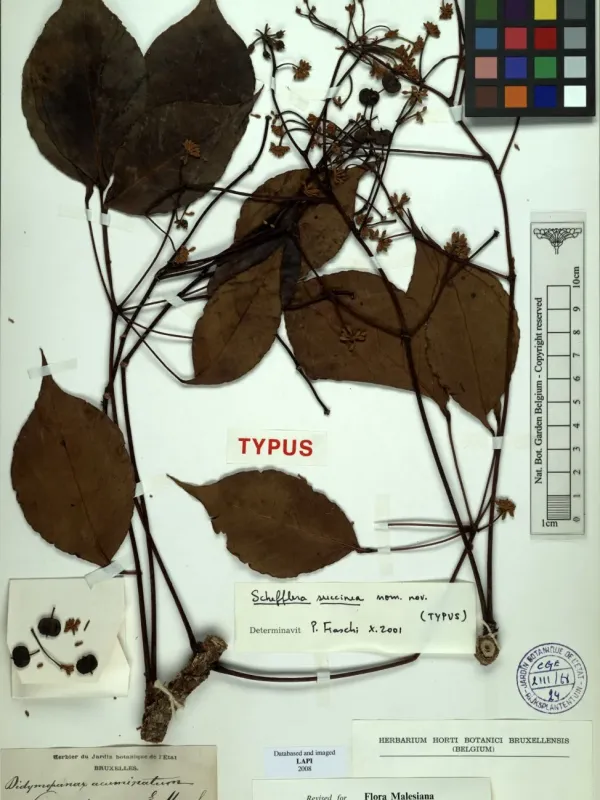
The Amber Schefflera (Schefflera succinea) is a tropical perennial plant belonging to the Araliaceae family. Originally native to humid forest environments, this species is highly valued for its elegant foliage and distinct growth habit in decorative landscaping.
Cultivation of this species requires well-draining soil mixes that provide adequate aeration to the root system. Peat-based substrates supplemented with perlite or coarse sand are generally recommended to maintain the necessary structural stability and moisture retention.
The plant thrives in bright, indirect light conditions. While it can adapt to lower light levels, prolonged exposure to deep shade often results in stunted growth and the loss of the plant's characteristic vibrant leaf color and overall architectural density.
Temperature management is critical; the species performs best in a range between 20°C and 25°C. Exposure to sudden drops in temperature or cold drafts must be strictly avoided, as these factors can induce significant physiological stress.
High relative humidity is essential for optimal health. Regular misting or the use of humidifiers is advised, especially in controlled environments, to mimic the high-moisture atmosphere of its natural tropical origin.
Main diseases and pests
Spider mites are the most common pests affecting this plant, particularly in conditions where the air is dry. They feed on the sap of the leaves, eventually causing yellowing and leaf abscission if not controlled early.
Root rot, caused by overwatering or inadequate soil drainage, remains the most significant disease risk. This condition typically manifests as yellowing lower leaves followed by stem softening near the base.
Effective pest management includes routine inspections and regular wiping of leaves to remove dust and potential pest clusters. Early detection is the key to preventing widespread infestation of the foliage.
If fungal or insect issues occur, growers should apply appropriate biological or chemical treatments immediately. Maintaining a balanced watering cycle is the best preventive measure against soil-borne pathogens.
Overall plant hygiene, including the removal of dead organic material from the soil surface, prevents the spread of spores and reduces the habitat available for common agricultural pests.