
Narrow-leaf schefflera
Schefflera angustissima
Description
Growing requirements
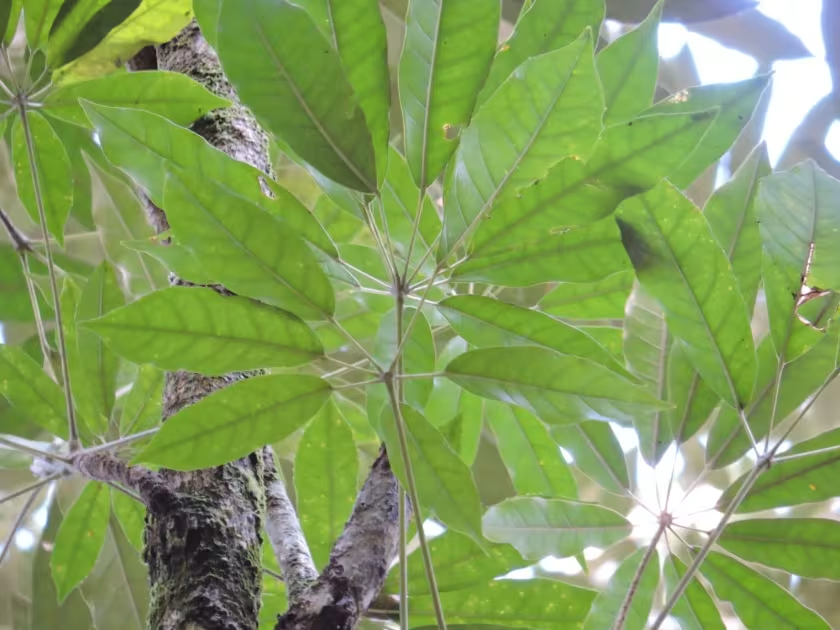
Narrow-leaf schefflera, or Schefflera angustissima, is a tropical plant belonging to the Araliaceae family. Native to the humid rainforests of Southeast Asia and China, it is highly valued for its elegant, deeply divided foliage that creates a delicate, thread-like appearance, making it a popular choice for indoor interior decoration.
This species thrives in bright, filtered light. While it requires plenty of illumination to maintain its growth, direct exposure to harsh sun rays can lead to leaf scorch. The ideal temperature range for this plant is between 18 and 24 degrees Celsius, as it is sensitive to drastic temperature fluctuations and cold drafts.
The substrate should be well-draining, nutrient-rich, and slightly acidic. A mix of peat, loam, and coarse perlite or sand provides the perfect balance between moisture retention and aeration. It is essential to ensure that the container has adequate drainage holes to prevent the accumulation of water, which is detrimental to the plant.
Watering requirements follow the seasonality of the plant's development. During the growing season, the soil should be kept consistently moist but not soggy. In the winter months, the watering frequency should be reduced, allowing the top layer of the soil to dry out significantly to prevent root health issues.
Regular fertilization is key to sustaining the plant's lush foliage. Using a balanced, water-soluble fertilizer specifically formulated for foliage plants during the spring and summer encourages healthy leaf production. Always ensure the soil is slightly damp before applying fertilizer to avoid chemical damage to the delicate root system.
Main diseases and pests
Pests such as spider mites, scale insects, and mealybugs are the primary threats to Narrow-leaf schefflera. These pests often congregate on the undersides of the leaflets, draining the sap and causing stunted development or yellowing of the leaves. Regular cleaning and biological control methods are highly recommended.
Root rot remains the most common pathological issue, primarily resulting from overwatering or inadequate soil drainage. Symptoms of such infections include wilting, blackened stems at the soil level, and a distinct lack of resilience in the foliage. Preventive measures include strictly controlled irrigation and the use of sterile potting media.