
Schefflera morototoni
Schefflera morototoni
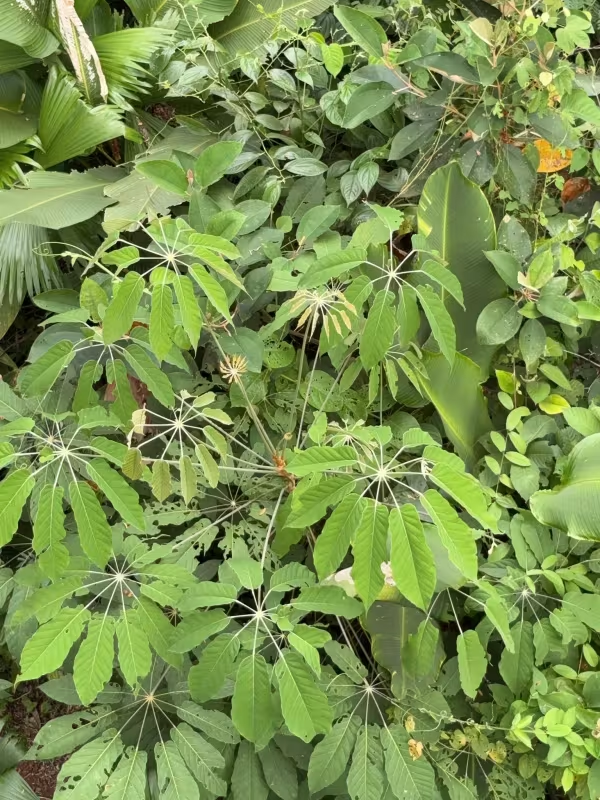
Description
Sowing dates
Propagation of this culture in natural conditions occurs primarily through seeds. In nurseries, seeds must be sown into prepared substrates immediately after collection, as their viability decreases rapidly over time.
The optimal time for sowing is the beginning of the rainy season, which provides seedlings with sufficient moisture for root establishment. Utilizing greenhouses with controlled humidity significantly increases the percentage of healthy planting material.
Soil preparation for sowing requires the incorporation of organic fertilizers and the provision of high drainage. Seeds are sown at a depth not exceeding their diameter, preventing decay and promoting rapid germination.
Pricking out young plants is performed when they reach a height of 15–20 centimeters. It is crucial to maintain proper spacing between plants to ensure full light exposure and avoid competition for nutrients.
Transplanting to the permanent growing site is possible 6–10 months after germination. By this stage, seedlings should possess a well-developed root system and a strengthened main stem.
Growing requirements
Schefflera morototoni is a fast-growing tree in the Araliaceae family, reaching significant dimensions in its natural habitat. The crop prefers a tropical climate with a uniform distribution of rainfall and an absence of sharp temperature fluctuations.
The plant demonstrates high adaptability to various soil types, including poor and acidic substrates typical of secondary forests. However, the best biomass increment is observed on well-drained loams with high humus content.
Normal vegetation requires intense sunlight, as the culture is a light-demanding species. In dense stands, plants tend to stretch vertically in search of light, which can negatively affect the wood quality.
The crop is extremely sensitive to waterlogging in the root zone, so site selection for planting should exclude low-lying areas. In industrial cultivation, it is recommended to create terraces if the terrain slope exceeds critical points.
In regions with a distinct dry season, drip irrigation must be organized to maintain leaf turgor. Stable access to water in the first two years after planting is the key to forming a stable plantation.
Yield
The primary product of Schefflera morototoni utilization is wood, which is valued for its lightweight nature and uniform structure. Economic use includes the manufacturing of plywood, matches, and packaging materials.
The biological productivity of the species is characterized by rapid growth rates, allowing it to reach marketable trunk sizes in a short forestry cycle. In plantation conditions, rotation can range from 15 to 25 years, depending on specific goals.
Beyond timber, the tree plays a vital role in restoring degraded ecosystems. Thanks to its powerful root system, it effectively holds soil in place and facilitates the natural regeneration of other forest species.
The volume of merchantable timber yield depends on planting density and regular maintenance. Conducting sanitary thinnings at a young age allows for the redistribution of tree resources in favor of the central trunk, enhancing product quality.
In agroforestry systems, the tree can be used as a component of alley cropping, providing shade for less light-demanding agricultural crops. This creates a favorable microclimate and protects the soil from erosion.
Main diseases and pests
The greatest danger to young seedlings comes from root system fungal diseases, arising from improper watering regimes. Prevention includes using high-quality drainage and fungicide soil treatments before planting.
Pests, such as leaf-eating insects and specific scale insects, can cause damage to foliage. Regular crown monitoring allows for the timely application of biological pest control methods.
Damage from stem borers is possible when trees are weakened by adverse climatic factors. Affected specimens require immediate sanitary removal to prevent the spread of insects to healthy trees.
Competition from weeds is a critical factor in the first years of the culture's life. Regular weeding and mulching of the tree circles help avoid growth retardation and reduced seedling immunity.
Ecological stress caused by anomalous droughts makes the culture more susceptible to secondary infections. Adherence to agronomic regulations and maintaining an optimal water balance are the main methods for protecting plantations.