
Schefflera pueckleri
Schefflera pueckleri
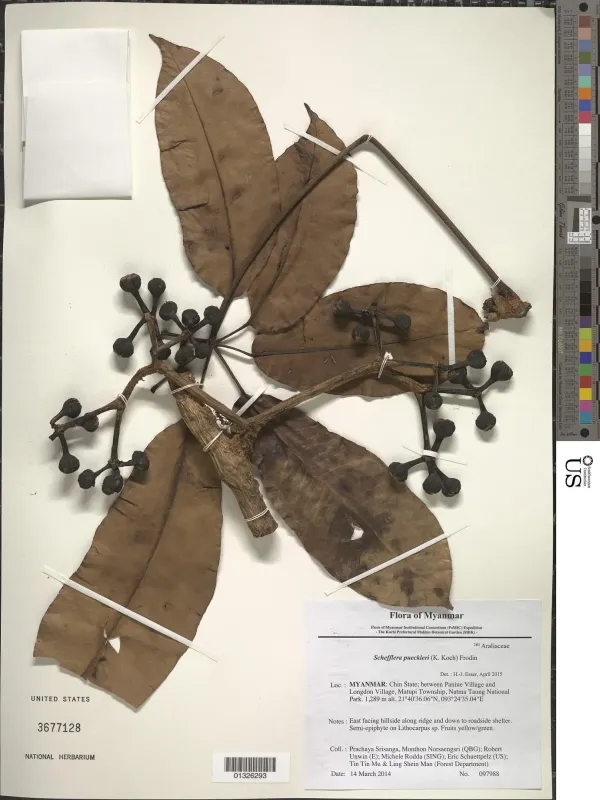
Description
Growing requirements
Schefflera pueckleri belongs to the Araliaceae family and is highly valued for its elegant, palmately compound foliage. It is native to the tropical forests of Southeast Asia, where it thrives in humid and warm environments.
This species requires bright, indirect sunlight to maintain its color and vigorous growth. Intense direct sun exposure can scorch the leaves, while insufficient light leads to leggy stems and leaf drop.
The ideal temperature for this plant ranges from 18°C to 24°C. It is sensitive to cold drafts and should be kept away from air conditioning vents or heaters during the winter months.
Well-draining, nutrient-rich soil is essential for healthy development. A mix of peat, perlite, and bark is often used to ensure excellent aeration and prevent root compaction.
Watering should be balanced: keep the soil consistently moist but never waterlogged. Regular misting or the use of a humidifier is recommended to replicate the plant's native tropical humidity.
Main diseases and pests
Scale insects are among the most common pests affecting Schefflera pueckleri. They appear as small, brownish bumps on stems and the undersides of leaves, requiring manual removal or systemic insecticides.
Spider mites are a persistent threat in environments with low humidity. An infestation is usually identified by fine webbing and stippling patterns on the foliage surface.
Mealybugs can cluster in leaf axils, leaving behind a white, cottony residue. These pests weaken the plant and can lead to secondary fungal infections on the damaged tissues.
Root rot is the primary physiological disorder caused by overwatering or poor drainage. Symptoms include wilting leaves and dark, mushy roots, which often necessitate immediate repotting.
Routine inspection of the leaves and stems is critical. Integrated pest management practices, including proper hygiene and quarantine of new plants, are highly effective in protecting the culture.