
Siberian ginseng
Eleutherococcus trichodon
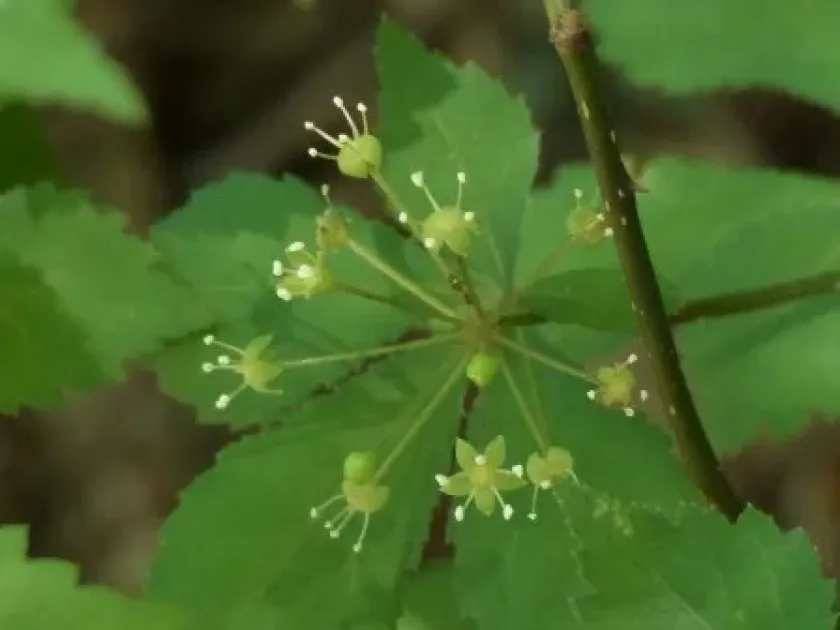
Description
Sowing dates
Siberian ginseng (Eleutherococcus trichodon) is typically propagated via seeds or vegetative methods, requiring specific conditions due to the long seed dormancy period.
Seeds require a lengthy stratification period of six to eight months at low temperatures to break dormancy and ensure successful germination in the spring.
For large-scale cultivation, sowing is often done in late autumn to allow the seeds to undergo natural stratification in the soil throughout the winter months.
Vegetative propagation using root cuttings or offshoots is a common practice, performed during the dormant season to ensure the survival and vigor of the young plants.
Planting density is crucial for long-term health, with spacing usually set at two to three meters between rows to allow sufficient airflow and ease of field management.
Growing requirements
This member of the Araliaceae family thrives in well-lit environments, although partial shade is beneficial for young plants during their establishment phase.
The plant prefers fertile, well-draining loam or sandy loam soils, which should be rich in organic matter to support the development of its substantial root system.
Moisture management is a key requirement, as the crop needs consistent hydration during the growing season while being sensitive to waterlogged, stagnant conditions.
Siberian ginseng is highly cold-hardy, making it a robust perennial suitable for temperate climates where winter temperatures can drop significantly below freezing.
Regular weeding and soil aeration around the root zone are essential maintenance tasks, as the crop does not compete well with aggressive weeds in its initial stages.
Yield
The economic value of Siberian ginseng lies in its roots and rhizomes, which are rich in eleutherosides, the active compounds sought by the pharmaceutical industry.
Sustainable harvesting of the roots typically begins after the plants reach seven to ten years of age, ensuring the crop has achieved peak pharmacological quality.
Annual yields depend heavily on site conditions, organic fertilization, and the age of the plantation, with well-managed plots offering consistent production levels.
Modern agronomic practices focus on optimizing root mass production through careful site selection and the avoidance of over-harvesting specific patches.
Proper record-keeping of plantation age and growth progress is vital for determining the optimal time to harvest for maximum market value.
Main diseases and pests
While relatively hardy, Siberian ginseng can be susceptible to fungal diseases such as leaf spots if planting density is too high or humidity is excessive.
Insect pests, including aphids and larvae of various beetles, may target young foliage or underground roots, necessitating integrated pest management strategies.
Maintaining proper spacing and ensuring excellent soil drainage are the most effective cultural methods for preventing the spread of common plant diseases.
In cases of heavy infestation, using organic-compliant biological controls is recommended to maintain the medicinal integrity of the crop and satisfy industry standards.
Vigilance during the early growth stages is necessary, as this is when the plants are most vulnerable to environmental stress and opportunistic pathogens.
Harvesting
Harvesting is performed in late autumn after the foliage has died back, which signals that the plant has redirected energy reserves into the roots for winter.
Roots are extracted carefully to prevent breakage, as damage to the fine root structures can lead to a loss of valuable material and lower the overall quality of the batch.
Post-harvest processing involves thorough washing in clean water to remove soil, followed by chopping and drying to stabilize the biological components.
Controlled-temperature drying is critical to preserve the plant's active compounds and prevent molding or degradation during the storage period.
The final product is graded based on cleanliness, appearance, and concentration of active substances, which are essential for its subsequent medicinal application.