
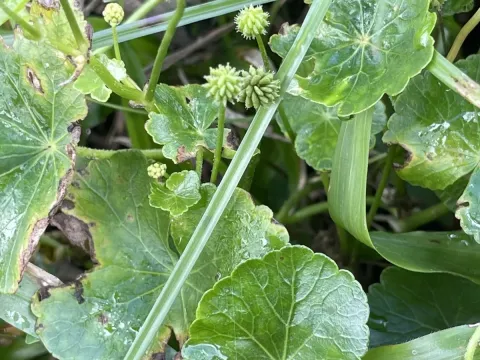
Marsh pennywort
Hydrocotyle maritima
Hydrocotyle maritima, commonly known as a type of marsh pennywort, is a herbaceous perennial plant belonging to the Araliaceae family. It is characterized by its creeping stems that nodes into the soil, creating dense, spreading ground covers in wetland environments.
What the section contains
Marsh pennywort
The plant originates from coastal regions and sandy habitats. It thrives in environments with consistently high moisture levels, which are essential for its vigorous growth and propagation. Its botanical structure allows it to occupy niche spaces in damp ecosystems effectively.
In terms of agricultural requirements, the soil must be kept moist at all times, as the plant is highly intolerant of drought conditions. Sandy or loamy substrates with good moisture retention and slight acidity are considered ideal for optimal biomass production.
Temperature management is crucial, as the plant prefers mild, stable conditions. While it can tolerate partial shade, it performs best in full sunlight, provided that the root zone is kept cool and well-hydrated to prevent thermal stress.
Maintenance of the crop involves regular monitoring of irrigation systems. Fertigation is often used to ensure nutrients are delivered directly to the root zone, supporting the plant's rapid vegetative growth cycles throughout the active season.
The primary threats to Hydrocotyle maritima include fungal pathogens such as Pythium and Rhizoctonia, which thrive in stagnant water or poorly drained soils. These pathogens lead to stem and root decay, significantly reducing crop yield.
Pests such as aphids, mites, and leaf-mining insects are common in intensive cultivation environments. These pests feed on the succulent leaves, causing structural damage and increasing the plant's susceptibility to secondary bacterial infections.
Cultural control measures, including maintaining proper plant spacing to ensure air circulation, are the most effective way to prevent disease outbreaks. Removing plant debris from the growing area reduces the inoculum levels for future cycles.
Chemical control should be applied judiciously, focusing on systemic pesticides that target specific pests without harming the plant's sensitive tissues. Integrated Pest Management (IPM) is strongly recommended for large-scale operations.
Early detection through frequent field scouting is essential. Implementing quarantine protocols for any new planting stock prevents the introduction of non-native pests or pathogens into the production facility.