
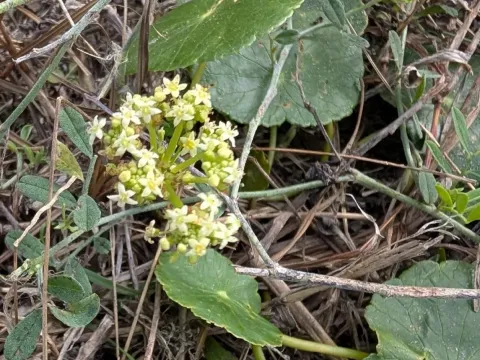
Large-leaved pennywort
Hydrocotyle bonariensis
The Large-leaved pennywort (Hydrocotyle bonariensis) is a perennial herbaceous plant belonging to the Araliaceae family. It is characterized by its distinct, peltate, circular leaves that are attached to long petioles rising from creeping, stoloniferous stems that spread rapidly across the soil surface.
What the section contains
Large-leaved pennywort
Originating in South America, this species has naturalized in many tropical and subtropical coastal regions worldwide. It is specifically adapted to sandy substrates and moist environments, commonly found in dunes, marshes, and freshwater edges where moisture is consistently available to the root system.
Climatic requirements for successful growth include a warm environment with temperatures typically ranging between 20°C and 28°C. The plant is highly sensitive to frost and extreme cold, which necessitates careful management in cooler climates or protected cultivation in indoor environments or greenhouses.
Soil preferences lean towards light, well-draining, yet moisture-retentive media. Sandy loams enriched with organic matter provide the best conditions for the vigorous development of its rhizomes. Adequate hydration is critical, as the plant suffers quickly under drought stress and requires consistent watering.
Management techniques involve controlling its aggressive growth habit. In landscape design, it is often necessary to install root barriers to prevent the species from encroaching upon other plants. Regular pruning is also beneficial to maintain the desired density and appearance of the foliage mat.
The most significant threats to the species include fungal pathogens that cause root rot, particularly in scenarios with poor drainage and stagnant air circulation. Prevention relies on maintaining proper sanitation and ensuring the soil does not remain waterlogged for extended periods.
Common pests affecting this crop are aphids and spider mites, which thrive on the succulent foliage. Infestations are more prevalent in confined spaces with low humidity, and they can be managed using systemic insecticides or regular mechanical cleaning of the leaves.
Mollusks such as snails and slugs represent a persistent nuisance, as they feed on the soft tissue of the leaves. Physical barriers, such as copper tape or crushed eggshells, combined with bait stations, effectively protect young plants from significant feeding damage.
Nutrient deficiencies, specifically nitrogen or iron, can manifest as yellowing or fading of the green leaves. A balanced fertilization program tailored to the needs of semi-aquatic Araliaceae is essential to maintain plant vigor and natural resistance to environmental stressors.
Proper environmental monitoring is key; keeping the surrounding area free of debris and dead plant material limits the habitat for harmful insects and fungal spores. Maintaining optimal spacing ensures enough airflow to keep the leaves dry and healthy throughout the growing season.