
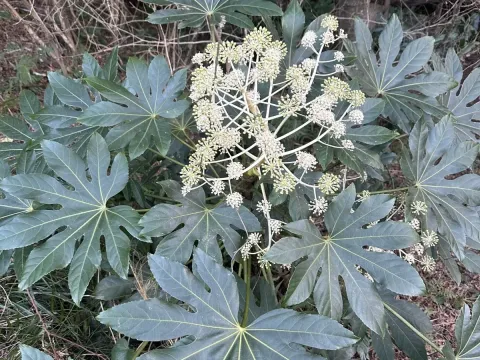
Fatsia
Fatsia Decne. et Planch.
Fatsia, belonging to the Araliaceae family, is a genus of evergreen shrubs known for their large, palmately lobed, glossy leaves. These plants are popular for their robust growth and ability to thrive in controlled environments.
What the section contains


Fatsia
Native to Japan and South Korea, Fatsia grows naturally in humid woodland areas. In agricultural and horticultural practices, they are cultivated primarily as ornamental indoor plants or in temperate garden zones.
Requirements for cultivation include bright, indirect lighting and well-drained, nutrient-rich soil. While Fatsia is tolerant of lower light conditions, consistent growth is best achieved when kept away from harsh, direct sunlight.
Maintaining appropriate soil moisture is critical for the health of the plant. During the growing season, regular watering is required, but it is essential to allow the top layer of soil to dry out slightly to prevent root rot.
The cultural use of Fatsia extends to public space landscaping and interior design, where it serves as a statement foliage plant. It provides a tropical aesthetic while being relatively easy to maintain in residential and commercial settings.
Common pests that affect Fatsia include spider mites, mealybugs, and scale insects. These pests thrive in dry environments and can cause significant foliage damage if infestations are left unchecked.
Pathological issues mainly involve root rot, which is usually a result of overwatering or poor drainage systems. Preventive measures include ensuring porous substrate and avoiding water accumulation in the pot tray.