
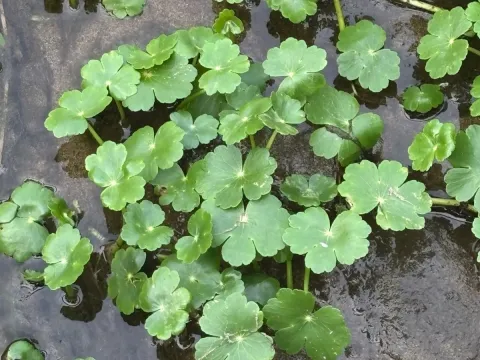
Floating pennywort
Hydrocotyle ranunculoides
Floating pennywort is a perennial aquatic plant belonging to the Araliaceae family. It is characterized by its creeping stems that form dense mats over the surface of slow-moving or stagnant freshwater bodies such as ponds, lakes, and drainage ditches.
What the section contains
Floating pennywort
The plant thrives in nutrient-rich environments, utilizing its root nodes to absorb minerals directly from the water column. It exhibits significant adaptability to varying light levels, performing well in both direct sunlight and partial shade conditions.
Botanically, it features small, kidney-shaped leaves with distinct margins. The stems are fragile but grow rapidly, allowing the plant to spread across large areas in a very short period of time if environmental conditions are favorable.
Temperature plays a crucial role in its development. While it prefers warm temperatures for optimal vegetative growth, it can withstand cooler conditions during the dormant phase, though severe frost can significantly damage the exposed plant tissues.
Management and maintenance involve keeping the plant within designated areas. Due to its vigorous growth rate, it is often classified as a management-intensive species that requires regular monitoring to prevent it from outcompeting native aquatic flora.
Common threats to the health of floating pennywort include fungal pathogens that thrive in stagnant water with poor aeration. These infections typically manifest as necrotic spots on the leaves or decaying stem segments.
Pests such as aphids and specialized aquatic beetles can cause localized damage to the stems and leaves. Heavy infestations weaken the plant's structural integrity and may attract further secondary pathogens.
Environmental stress, particularly caused by fluctuations in water levels or extreme pollution, poses a serious risk to the plant's population. Contaminants can disrupt the uptake of nutrients, leading to chlorosis and stunted growth.
Competition from other fast-growing invasive aquatic species often leads to nutrient depletion in the water, which hinders the expansion of floating pennywort colonies in the long term.
Mechanical harvesting and the use of aquatic herbicides are standard practices for controlling the density of this plant in public waterways. These interventions serve as the primary external threat to its established populations.