
Rice-paper plant
Tetrapanax papyrifer
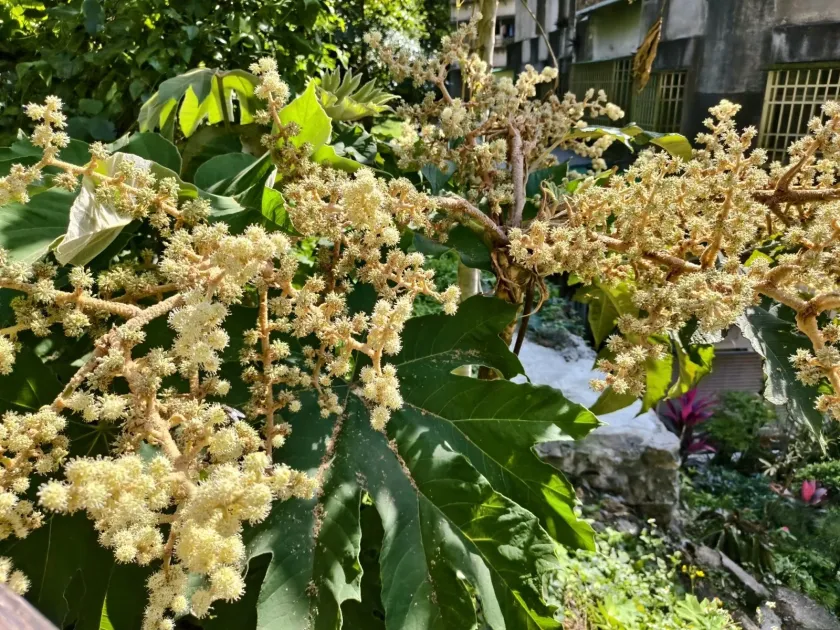
Description
Sowing dates
Propagation of Tetrapanax papyrifer is primarily achieved through seeds or by dividing the root suckers that emerge near the base of mature plants.
Seeds should be sown in a well-drained, sterile substrate in early spring, requiring a consistent temperature of about 20–22°C for successful germination.
Seedlings need to be transplanted into individual pots once they reach a manageable size, ensuring they are not exposed to direct drying winds during their early development.
For large-scale cultivation, root division is often preferred as it ensures uniformity in the crop and results in faster biomass accumulation compared to seed-grown plants.
Spacing is critical to allow the plant's massive, palmate leaves to expand fully without shading adjacent plants excessively, usually requiring at least 2–3 meters between rows.
Growing requirements
As a member of the Araliaceae family, this species thrives in sub-tropical climates with high ambient humidity and fertile, moist soil.
The plant prefers a semi-shaded environment where it is protected from harsh midday sun, which can cause significant leaf scorch and dehydration.
Soil requirements focus on high organic content and excellent drainage, as the plant dislikes stagnant water, which can easily trigger root rot.
Temperatures should remain mild; while the plant can tolerate short periods of frost, its above-ground parts are likely to die back in colder climates.
Regular irrigation is necessary throughout the growing season, especially during hot spells, to support the rapid development of its iconic large foliage.
Yield
The primary yield from this crop is the pith (the soft, white, inner core of the stem) which serves as the raw material for traditional paper manufacturing.
Industrial productivity peaks when the plants reach 4–5 years of age, providing the most substantial and high-quality pith material per stem.
Yield efficiency is heavily influenced by the use of nitrogen-rich fertilizers and adequate water supply, which directly affect the thickness of the stem core.
Strategic pruning and thinning of the stand can help ensure that resources are focused on the healthiest stems, thereby increasing the overall harvest volume.
Crop rotation and soil rejuvenation are important practices for maintaining long-term high yields in plantations dedicated to technical raw material production.
Main diseases and pests
Spider mites and scale insects are the most common pests that thrive in dry, warm conditions and can quickly infest large leaf surfaces.
Fungal infections, particularly root rot, often occur due to poor drainage or overwatering, necessitating precise water management techniques.
Powdery mildew can affect the foliage during periods of stagnant, humid air, making proper ventilation between plants a key preventative measure.
Slugs and snails can cause cosmetic and structural damage to young plants, often requiring the use of physical barriers or targeted biological control.
Sanitation practices, such as the prompt removal and destruction of diseased plant matter, are essential to prevent the spread of pathogens across the plot.
Harvesting
Harvesting involves cutting the mature stems during late autumn or early winter when the sap flow has decreased significantly.
The stems are then processed by stripping away the bark and woody exterior to expose the spongy, white pith inside the cylinder.
This core material is carefully extracted and cut into desired segments or sheets, then dried in shaded, ventilated conditions to ensure quality.
Proper drying is essential to prevent discoloration and to maintain the absorbent, lightweight properties required for high-grade rice paper.
The resulting material is a versatile industrial and artistic product, serving both the papermaking industry and the floral craft sector.