
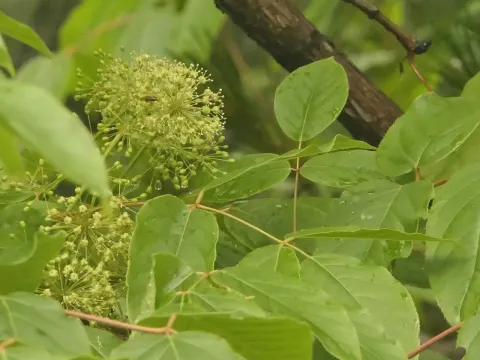
Aralia leschenaultii
Aralia leschenaultii
Aralia leschenaultii is a perennial woody plant species belonging to the Araliaceae family. Its natural habitat includes the mountainous tropical forests of South-East Asia, particularly in regions of India and Sri Lanka.
What the section contains
Aralia leschenaultii
Botanically, this species is noted for its robust, pinnate foliage and distinctive growth habit. In an agricultural or horticultural setting, the plant is valued for its ability to thrive under partial canopy conditions and its structural appeal in warm climate zones.
Successful cultivation requires soil rich in organic matter, featuring excellent drainage properties to prevent root suffocation. The ideal soil profile for this crop is slightly acidic to neutral, maintained at a consistent level of moisture.
Climate requirements focus on high atmospheric humidity and protection from extreme temperature fluctuations. The optimal thermal environment for development ranges between 18 and 26 degrees Celsius, as this species is sensitive to cold stress.
The economic utilization of Aralia leschenaultii is primarily focused on the ornamental trade and nursery production. Furthermore, the genus Aralia is widely researched for its pharmacological properties, as many species contain active compounds used in medical preparations.
Fungal root diseases are the primary threats to crop health, often triggered by waterlogged substrates or inadequate drainage systems.
Common pests include spider mites, mealybugs, and scale insects, which frequently attack the foliage under greenhouse conditions with low air circulation.
Integrated pest management protocols, including early detection and the use of targeted acaricides or insecticides, are essential for maintaining yield quality.
Proper sanitation, including the removal of dead or decaying plant tissue, significantly reduces the risk of fungal proliferation within the plantation.
Ensuring adequate air flow between plants is a crucial cultural practice that helps manage both humidity levels and the incidence of microbial pathogens.