
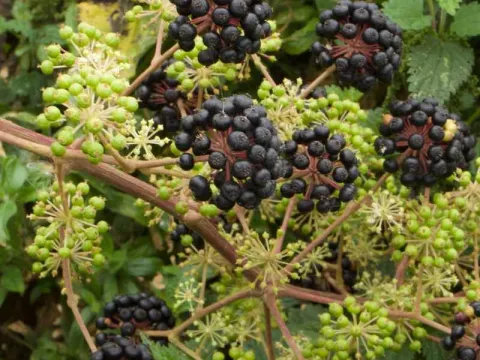
Aralia continentalis
Aralia continentalis
Sowing seeds of Aralia continentalis is typically performed in late autumn, as the seeds require a prolonged period of stratification in cold soil to germinate.
What the section contains
Aralia continentalis
If spring sowing is preferred, seeds must be artificially stratified in moist sand at temperatures between 0 and 5 degrees Celsius for about 3 to 4 months.
The seeds are sown in rows with a spacing of 45 to 60 centimeters, buried at a depth of no more than 1 to 2 centimeters in well-prepared, loose soil.
Germination is slow and may take several weeks, so it is essential to maintain constant soil moisture to support the development of young seedlings.
In the first year, plants grow very slowly and develop a basal leaf rosette, necessitating rigorous weed control to prevent competition for nutrients.
Aralia continentalis thrives in well-drained, fertile loamy or sandy loam soils with a neutral or slightly acidic pH balance for optimal growth.
The crop requires regular moisture but is highly sensitive to waterlogging, which can easily lead to root rot and severe damage to the plant structure.
The plant performs well in both full sun and partial shade, making it a versatile choice for cultivation in various agroforestry systems or plantations.
Incorporating high levels of organic matter, such as mature compost, into the soil before planting is critical for long-term health and biomass production.
Optimal temperature for active vegetation ranges from 18 to 25 degrees Celsius, and the species is known for its excellent winter hardiness.
Yield estimation for Aralia continentalis depends on the age of the plantation, as the roots are the primary portion harvested for medicinal use.
Industrial harvest of the roots is usually initiated when plants reach 4 to 5 years of age, ensuring the highest concentration of active compounds.
Under intensive agricultural management, a well-established plantation can produce up to 5 to 8 tons of dried root material per hectare of land.
The accumulation of triterpene glycosides increases significantly as the root system matures, peaking just before the autumn dormancy of the plant.
Yield quality is highly dependent on proper nutrient management and ensuring sufficient spacing between plants to prevent competition and stunted growth.
Root rot is the most common threat to Aralia continentalis, often resulting from poor soil drainage or improper water management during heavy rains.
Powdery mildew may occur in dense plantings with poor air circulation, requiring preventive fungicide treatments to maintain the health of the foliage.
Young seedlings are frequently targeted by slugs and snails, which can cause significant damage if the plantation is not monitored regularly in spring.
Aphids and spider mites may infest the leaves during hot, dry spells, necessitating prompt intervention to prevent a decline in plant vigor and health.
Maintaining a strict crop rotation cycle is essential to prevent the accumulation of soil-borne pathogens and to ensure the longevity of the plantation.
Harvesting takes place in late autumn, after the aerial parts of the plant have yellowed and died back, signaling the maximum concentration of nutrients.
Mechanical digging tools are used to lift the root systems from the soil, taking care to minimize damage to the lateral roots and main rhizome structure.
Immediately after harvest, the roots are thoroughly cleaned of soil, washed with water, and sorted to remove any necrotic or damaged sections.
Drying is conducted in controlled conditions at temperatures not exceeding 60 degrees Celsius to ensure the preservation of bioactive chemical compounds.
The dried product is stored in well-ventilated, moisture-free storage areas to protect the quality of the pharmaceutical raw material before processing.