
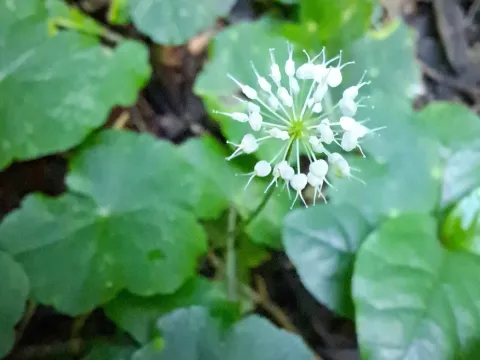
Brazilian pennywort
Hydrocotyle leucocephala
Brazilian pennywort (Hydrocotyle leucocephala) is a perennial herbaceous plant belonging to the Araliaceae family. Native to the tropical regions of Central and South America, it thrives in humid habitats and water margins.
What the section contains
Brazilian pennywort
The plant features a creeping stem structure, with alternate leaves that are round or shield-shaped. It is highly versatile, capable of growing as a fully submerged aquatic plant or as an emergent plant in humid terrestrial environments.
To ensure optimal growth, the species requires moderate to high levels of light. If lighting is insufficient, the plant tends to become leggy, with increased internode length and smaller leaf development.
Regarding soil and water requirements, the plant prefers nutrient-rich substrates and water that is relatively soft or medium in hardness. Maintaining a stable temperature between 20–28 degrees Celsius is crucial for steady biomass production.
The main commercial applications include the aquarium hobby, pond landscaping, and botanical collections. It serves as an excellent natural filter, effectively absorbing nitrates and helping to maintain water quality in intensive aquatic systems.
Common threats to the crop include lighting deficiencies, which lead to stunted growth and leaf chlorosis. Ensuring the spectrum and intensity of light meet the physiological needs of the plant is the primary defense against decline.
Pathogenic issues typically arise from water stagnation or poor circulation, leading to stem rot. Proper aeration and maintaining clean water conditions prevent most fungal infections affecting the submerged sections.
In greenhouse settings, pests such as aphids and spider mites can attack the succulent stems and leaves. Integrated pest management using non-toxic solutions is recommended for maintaining plant health in high-density growth areas.
Imbalance in essential nutrients, specifically iron deficiency, causes yellowing of the foliage. Regular water analysis and supplementation with necessary trace elements are required for vibrant growth.
Physical damage during harvesting or cleaning can create entry points for pathogens. Careful handling and regular maintenance pruning are essential agricultural practices to preserve the integrity of the plant cluster.