
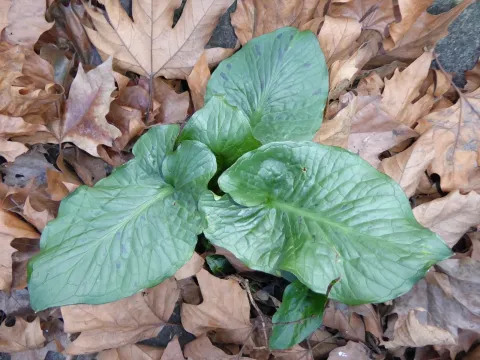
Cuckoo pint
Arum maculatum
Cuckoo pint, or Arum maculatum, is a prominent member of the Araceae family. This perennial tuberous plant is native to a wide range of temperate regions across Europe and Western Asia.
What the section contains
Cuckoo pint
The crop thrives in shaded woodland environments with nutrient-rich, moist soil. It requires consistent moisture levels but must have excellent drainage to prevent tuber decay.
Climate requirements include temperate conditions. It is highly adaptable to various European climates, effectively utilizing the early spring season for rapid growth before the canopy closes.
Botanically, it is recognized for its unique spathe and spadix inflorescence, which produces heat through metabolic processes to attract pollinators during the flowering stage.
Management practices for this species are limited, as it is primarily cultivated for ornamental or botanical study purposes, and it remains toxic if consumed raw.
Common threats to Arum maculatum populations include root and tuber rot, especially when the soil remains waterlogged for extended periods during the dormancy phase.
Pest pressures are predominantly caused by mollusks such as slugs and snails, which can defoliate the plant by feeding on the leaves during wet spring weather.
Fungal infections, such as leaf spot, may appear if the plants are placed in areas with poor ventilation and high humidity, affecting the aesthetic value of the crop.
Cultural control methods involve maintaining clean field conditions and ensuring proper spacing between plants to improve airflow and light penetration.
While chemical controls exist, they are rarely needed for this hardy plant, as integrated pest management focuses mainly on providing the correct habitat conditions.