
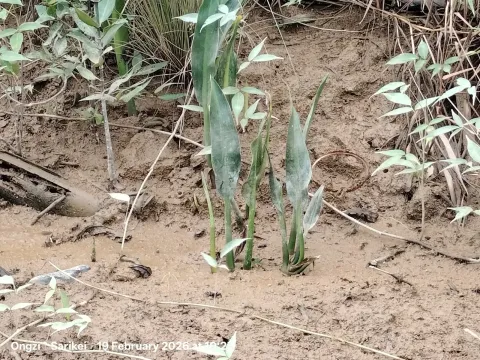
Cryptocoryne
Cryptocoryne Fisch. ex Wydler
Cryptocoryne is a genus of perennial herbaceous plants belonging to the Araceae family. Native to the tropical regions of Southeast Asia, these plants are typically found in riverbanks, streams, and marshy habitats where they thrive in saturated, nutrient-rich soils.
What the section contains

Cryptocoryne
Botanically, they are characterized by their diverse leaf morphologies, ranging from lanceolate to cordate shapes. They feature a well-developed rhizome system that allows them to spread effectively across the substrate in aquatic or semi-aquatic environments.
Success in cultivation depends on maintaining stable environmental parameters. The ideal temperature range for most species is between 22 and 28 degrees Celsius. Fluctuations in water chemistry, light, or temperature can lead to physical stress.
The soil should be fine-grained and rich in organic matter to provide necessary nutrients to the root system. Moderate lighting is preferred, as high-intensity light often encourages competitive algae growth that can overwhelm the slower-growing Cryptocoryne.
Propagation is primarily vegetative, occurring through subterranean runners (stolons). This characteristic allows the plant to form dense clusters, making it a staple in the design of aquascapes and tropical paludariums worldwide.
The most notorious issue in cultivating this genus is the so-called "crypt melt," or Cryptocoryne disease. This involves the rapid disintegration of leaf tissue, typically triggered by sudden changes in water parameters or significant physical disturbances.
Snails are the most frequent pests, as they may graze on the softer leaf tissues. Additionally, various types of filamentous algae can attach to the leaves, blocking light absorption and potentially suffocating the plant.
Deficiency symptoms, particularly yellowing between the veins, are common if essential micronutrients like iron or manganese are absent from the substrate. Regular fertilization is necessary to prevent these metabolic issues.
Fungal or bacterial pathogens may exploit weakened plants, especially if there is a buildup of decaying organic matter in the substrate. Maintaining a clean environment is the most effective preventative measure against these infections.
Root damage caused by frequent replanting is a significant stressor. To ensure longevity, it is recommended to keep the plants in one location, allowing the root system to establish itself firmly in the substrate without ongoing disruption.