
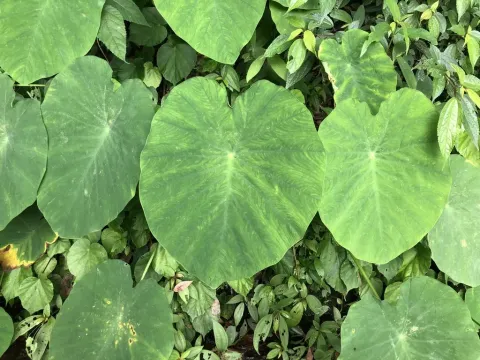
Colocasia
Colocasia
Colocasia, commonly known as Taro, belongs to the Araceae family. It is propagated primarily through suckers or sections of the corms, which should be planted in warm, well-prepared soil during the onset of the growing season.
What the section contains


Colocasia
For large-scale cultivation, deep plowing is essential to ensure proper root penetration and soil aeration. The planting distance is typically set between 60 and 90 centimeters to allow for optimal canopy development.
Planting dates depend heavily on climate; in tropical regions, it can be year-round, while in temperate zones, it is restricted to the frost-free season. The soil temperature must remain above 15 degrees Celsius for successful sprouting.
Choosing healthy, disease-free planting material is crucial for high yields. It is recommended to select corms from vigorous, high-yielding parent plants to ensure genetic quality in the next generation.
Proper spacing and moisture management during the initial stages are key to establishing a uniform crop that can withstand subsequent environmental stressors.
Colocasia thrives in high-moisture environments and is well-suited for wetlands or areas with abundant irrigation. It requires a significant amount of water to develop its large, succulent foliage.
The ideal soil is fertile, rich in organic matter, and slightly acidic to neutral. High organic content helps in maintaining the required soil structure and nutrient availability for consistent growth.
The crop prefers tropical or subtropical climates with temperatures between 25 and 30 degrees Celsius. Exposure to cold temperatures can stop growth, while frost is fatal to the entire plant.
While Colocasia can tolerate partial shade, it achieves the best photosynthetic efficiency in bright, filtered light. Protecting the leaves from scorching sun is necessary in extremely hot and dry regions.
Nutrient management is centered on nitrogen for leaf production and potassium for corm development. Regular fertilization schedules significantly enhance the overall weight and quality of the harvest.
Average yields for Colocasia range from 10 to 20 metric tons per hectare depending on management intensity and cultivar selection. Proper water delivery is the primary driver of high production.
The crop is highly valued for its corms, which are rich in starch and essential minerals. In addition to tubers, the young leaves and petioles are harvested as leafy vegetables in many culinary traditions.
Industrial applications include the production of taro flour and starch, which are used in various food processing industries due to the small size of the starch granules, making them easy to digest.
Market demand is steadily increasing as consumers seek gluten-free alternatives and functional foods. Colocasia provides a reliable caloric source for both human consumption and animal feed.
Optimizing the harvest timing ensures that the corms have reached maximum size and starch concentration, directly impacting the economic viability of the farm operation.
Common threats include fungal diseases such as leaf blight and corm rot, which are often exacerbated by poor drainage and humid conditions. Effective field sanitation and crop rotation are standard preventive measures.
Pests like spider mites and aphids frequently attack the foliage, especially under dry conditions. Implementing integrated pest management strategies helps control these infestations without excessive chemical use.
- Phytophthora leaf blight: causes necrotic spots on leaves.
- Taro beetle: bores into the corms, reducing marketability.
- Root-knot nematodes: lead to stunted growth and yield loss.
Regular monitoring of the plantation is vital for the early detection of pathogens. Using disease-resistant cultivars can significantly reduce the risk of widespread crop loss.
Maintaining a clean field, free of weeds, also helps by removing potential alternate hosts for pests and improving airflow around the plants.
Harvesting usually occurs 6 to 12 months after planting, signaled by the yellowing and wilting of the older leaves. This indicates that the plant has ceased active growth and diverted all energy to the corm.
Corms are harvested by carefully lifting them from the soil, taking care not to bruise or cut the skin. Mechanical harvesters must be calibrated to prevent damage to the valuable root structure.
Post-harvest handling involves cleaning, drying in a shaded area, and curing the corms. This process hardens the skin, allowing for better storage life and protection against entry points for rot-causing fungi.
Proper storage requires cool, dry, and well-ventilated conditions to prevent decay. When managed correctly, Colocasia corms can remain in good condition for several months.
For commercial distribution, the produce is graded by size, washed, and packed in ventilated containers to ensure it arrives at the market in optimal condition.