
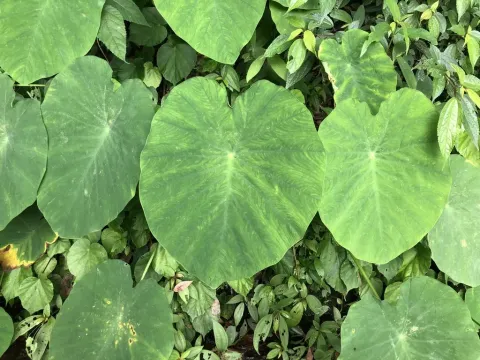
Colocasia
Colocasia x Leucocasia
Colocasia planting is ideally scheduled when soil temperatures consistently reach at least 15-20 degrees Celsius, ensuring the tubers have optimal conditions for early development.
What the section contains

Colocasia
Growers typically use high-quality corms or cormel pieces with at least one viable growth bud, ensuring these are planted at a depth of 5 to 10 centimeters for stability and moisture access.
The spacing between plants must be maintained at approximately 60 to 70 centimeters to accommodate the large foliage canopy and prevent competition for resources among individual plants.
In cooler climates, farmers often utilize a nursery phase in protected environments, allowing seedlings to start growing earlier before they are transplanted into the open field once the frost risk has passed.
Proper planting density is vital to achieving a high-quality yield, as overcrowding can lead to poor aeration and increased susceptibility to fungal diseases within the dense plant cluster.
Colocasia is a member of the Araceae family and requires a tropical or subtropical climate characterized by high humidity, consistent warmth, and ample moisture throughout the growth cycle.
The crop thrives in rich, deep, and well-drained soils that are high in organic matter, as these conditions support the massive underground development characteristic of the plant.
The ideal temperature range for Colocasia is between 22 and 30 degrees Celsius; temperatures below 10 degrees Celsius can stall growth and may cause significant damage to the plant tissue.
Water management is critical, as Colocasia is highly sensitive to drought; consistent irrigation is necessary, especially during the peak summer months when the leaves have maximum transpiration rates.
Fertilization should prioritize nitrogen and potassium to encourage the development of robust foliage and the subsequent accumulation of starches within the root systems.
Yield potential of Colocasia is heavily influenced by the length of the growing season, which typically ranges from 6 to 9 months depending on the specific variety and geographic location.
With intensive cultivation practices, including optimal irrigation and nutrient management, producers can expect yields ranging from 15 to 30 metric tons per hectare.
Productivity is maximized when environmental stressors, such as extreme heat or prolonged waterlogging, are mitigated, ensuring that the energy produced by photosynthesis is directed into tuber storage.
The size and uniformity of the tubers are significant indicators of market quality, and these are achieved through regular weed control and consistent soil moisture levels during the bulking stage.
Harvest timing is a key determinant of final yield; harvesting too early results in smaller, less dense tubers, while waiting too long can expose the crop to soil-borne pathogens.
Fungal diseases, particularly leaf blight, represent the most significant threat to Colocasia production, often spreading rapidly under conditions of high humidity and poor air circulation.
Pests such as aphids, spider mites, and whiteflies frequently colonize the undersides of the leaves, weakening the plant by extracting sap and potentially transmitting viral diseases.
Root-knot nematodes can cause severe damage to the underground corms, making crop rotation with non-host species an essential strategy for long-term soil health and disease prevention.
Integrated pest management, including the use of resistant varieties and biological control agents, is recommended to maintain plant health while minimizing reliance on synthetic pesticides.
Good agricultural hygiene, such as the removal of post-harvest crop residues and the selection of disease-free planting material, is fundamental to reducing the risk of pest outbreaks.
Harvesting Colocasia occurs when the older leaves begin to turn yellow and droop, indicating that the plant has completed its cycle of starch accumulation in the corms.
Corms should be carefully lifted from the soil to avoid mechanical bruising, as damaged tubers are highly susceptible to secondary bacterial infections that lead to rapid post-harvest decay.
Post-harvest handling involves cleaning the tubers of excess soil and curing them in a shaded, well-ventilated area for several days to harden the skin and promote wound healing.
Storage requires cool, humid conditions, typically between 12 and 15 degrees Celsius, to maintain tuber quality and prevent the tubers from dehydrating or sprouting prematurely.
Strategic harvest planning helps ensure a consistent market supply, with proper storage techniques extending the shelf life of the crop for several months following the initial extraction.