
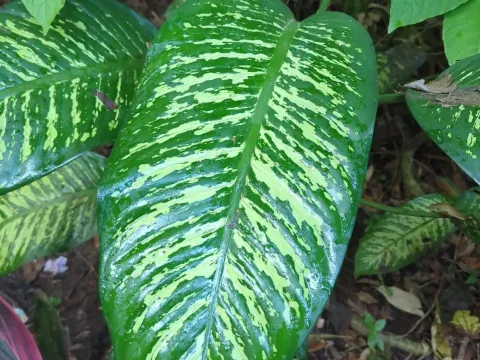
Dieffenbachia
Dieffenbachia Schott
Dieffenbachia (Dieffenbachia Schott) is a perennial herbaceous plant belonging to the Araceae family. It is native to the tropical forests of South and Central America, where it thrives in shaded, humid environments.
What the section contains


Dieffenbachia
The plant requires a stable temperature range, typically between +18°C and +25°C. It is sensitive to cold drafts and sudden temperature fluctuations, which can trigger leaf drop and physiological stress.
High relative humidity is essential for the healthy development of this crop. The substrate must be well-drained, fertile, and slightly acidic to support vigorous growth throughout the growing season.
Indirect bright light is ideal for Dieffenbachia. While it can tolerate lower light levels, variegated varieties require sufficient light to maintain their unique foliage patterns and color intensity.
Dieffenbachia is primarily utilized in ornamental horticulture for indoor landscaping. It is highly valued for its large, attractive leaves that contribute to the aesthetic quality and air purification of indoor spaces.
The main pests affecting Dieffenbachia include spider mites, scale insects, and mealybugs. These pests are particularly problematic in dry environments and require consistent monitoring.
Fungal and bacterial diseases, such as leaf spot, anthracnose, and root rot, are common threats usually triggered by overwatering or poor soil drainage, which promotes pathogen growth.
The plant sap contains calcium oxalate crystals, which are toxic and cause irritation to skin and mucous membranes. Appropriate safety measures, including the use of gloves, are mandatory during cultivation.
Effective pest management involves maintaining high humidity levels, periodic cleaning of leaves, and the application of targeted insecticides or acaricides when necessary.
Disease prevention is centered on proper watering techniques, ensuring excellent airflow, and avoiding overcrowding of plants, which creates an environment conducive to pathogen proliferation.