
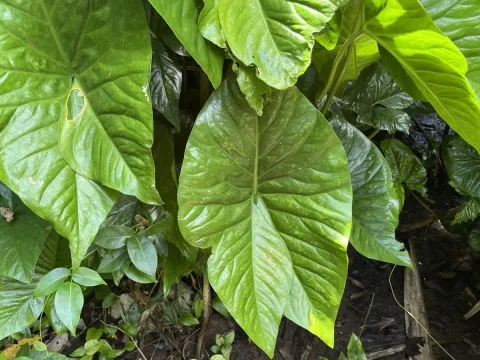
Cyrtosperma
Cyrtosperma
Cyrtosperma is a genus of large, perennial herbaceous plants in the Araceae family. The most economically significant species is Cyrtosperma merkusii, commonly referred to as giant swamp taro, which serves as a staple food in many Pacific Island cultures.
What the section contains

Cyrtosperma
These plants are uniquely adapted to wetland environments, thriving in swamps, marshes, and periodically flooded areas where other traditional crops might perish. The ability of the roots to function in water-saturated conditions is a key botanical trait.
Optimal growth requires a tropical climate with high humidity and consistent temperatures, ideally between 24°C and 30°C. Cold spells are detrimental and can significantly inhibit the development of the plant.
The soil must be rich in organic matter and acidic in pH. In traditional farming systems, growers often create specific low-lying pits that facilitate water retention and provide the necessary nutrients for the plant's massive rhizomes.
Propagation is typically done through vegetative offsets or the replanting of the crown of the rhizome after harvest, ensuring genetic uniformity and reliable production cycles.
The primary yield consists of large, starch-rich rhizomes that can grow quite heavy over several years. They serve as a crucial source of carbohydrates in regions where they are cultivated.
A typical harvest cycle spans from three to five years. While slower than some other tuber crops, the biomass accumulation in Cyrtosperma provides a steady and reliable food source once established.
Yield efficiency is highly dependent on the quality of the water supply and the richness of the organic mud in which the plant grows. Strategic planting density helps maximize the output per square meter.
The entire plant possesses nutritional value, though young leaves and petioles must be processed and cooked thoroughly to neutralize calcium oxalate crystals, which cause irritation if consumed raw.
Post-harvest, the rhizomes offer decent storage longevity if kept in a cool, ventilated place, making them an excellent buffer against food shortages in isolated tropical island communities.
The primary threats to Cyrtosperma include fungal infections that manifest in stagnant water, leading to the decay of the petioles and, ultimately, the root system itself.
Insect pests, such as aphids and mealybugs, tend to colonize the tender young leaves. These infestations can stunt the plant's overall growth and weaken its resistance to other secondary pathogens.
Root-knot nematodes are significant subterranean threats that compromise the structure of the rhizomes. These pests create lesions that often become points of entry for various rot-causing bacteria and fungi.
Agricultural management requires the removal of infected plant debris to minimize the risk of pathogen spread. Healthy, disease-free planting material is the most effective defense against systemic issues.
Environmental management, specifically ensuring proper water circulation in cultivated plots, is essential for maintaining the hygiene of the growing area and preventing pest outbreaks.
Harvesting is a labor-intensive operation involving the extraction of heavy rhizomes from deep, water-logged soils. Farmers often use manual levers and specialized tools to carefully lift the tubers without damaging them.
Timing the harvest is critical; while rhizomes can be left in the ground for several years, there is an optimal stage where the starch content is highest and the texture is most desirable for consumption.
Once harvested, the tubers are cleaned of soil and debris. Excess leaves are trimmed, and the rhizomes are typically air-dried for a short duration to prepare them for long-term storage or immediate processing.
Storage facilities should prioritize ventilation and shade to maintain the tubers' structural integrity and nutritional value over months of shelf life.
Selective harvesting is often practiced, where only the mature, largest rhizomes are removed, allowing the smaller offsets to continue growing and regenerating the patch for future seasons.