
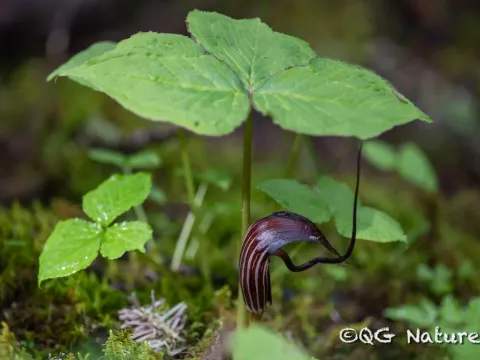
Arisaema elephas
Arisaema elephas
Sowing seeds of Arisaema elephas is best performed in autumn or early spring after the seeds have undergone a cold stratification process. The ideal germination temperature ranges between 15 and 18 degrees Celsius.
What the section contains
Arisaema elephas
When propagating by seed, it is crucial to recognize that germination can be asynchronous, sometimes occurring over several months. A well-draining, loose substrate enriched with organic matter is essential for successful seedling development.
Seeds should be covered with 1-2 centimeters of soil, and containers should be kept in a humid environment to maintain consistent moisture levels. Once the first true leaves emerge, the seedlings are ready for individual transplanting.
Vegetative propagation via tuber division is considered the most reliable method for home growers. Tubers should be carefully separated during the plant's dormant phase and replanted immediately to prevent desiccation.
Proper planting depth, typically between 5 and 10 centimeters, ensures the tuber develops a stable root system before the onset of summer heat. Adequate spacing is recommended to prevent competition and overcrowding.
Arisaema elephas is a member of the Araceae family that thrives in conditions mirroring its native Himalayan habitats. It prefers partial shade, as intense sunlight can cause severe leaf scorch and dehydration.
The soil must be fertile, airy, and exceptionally well-draining, as the tubers are highly susceptible to rot. A neutral to slightly acidic pH is ideal for promoting nutrient uptake and overall plant vigor.
Climate requirements include high atmospheric humidity and moderate temperatures throughout the growing season. The plant performs best in locations sheltered from harsh winds and direct afternoon sun.
Consistent, moderate watering is necessary; however, waterlogging must be avoided at all costs. Mulching with leaf mold helps mimic the forest floor and stabilizes soil moisture levels effectively.
Winter care is critical for this species, as it is not fully hardy in colder regions. Tubers should be lifted or heavily mulched to prevent frost damage during the deep winter months.
Fungal infections, particularly tuber rot, represent the most significant threat to Arisaema elephas. These pathogens often thrive in overly damp, poorly aerated soils, leading to rapid deterioration of the plant structure.
Slugs and snails are the primary pests affecting the foliage and inflorescences during the active growing season. Integrated pest management strategies, such as physical barriers, are recommended to protect the plants.
Spider mites may become problematic if the surrounding air humidity drops significantly. Regular monitoring of the foliage and misting can help deter these pests without relying heavily on chemicals.
Good garden hygiene, including the removal of dead or decaying plant material, is essential to reduce the risk of disease spread. Avoiding dense planting helps improve air circulation around the plants.
If chemical interventions are necessary, targeted fungicides applied only at the base of the plant are preferred over broad-spectrum applications. Periodic inspection of dormant tubers ensures the health of the collection.