
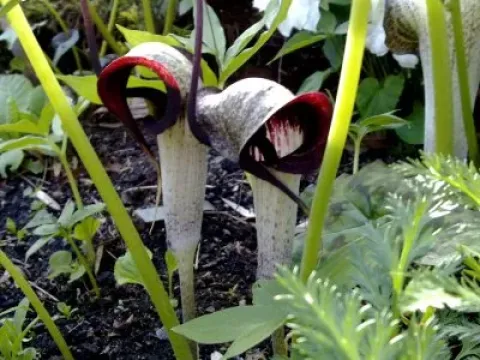
Arisaema angustatum
Arisaema angustatum
Arisaema angustatum is a fascinating perennial herb belonging to the Araceae family. It is native to Japan, typically inhabiting moist, shaded woodland environments where the soil is rich in decomposed organic matter and leaf mold.
What the section contains
Arisaema angustatum
Botanically, the plant features a distinct tuberous root system from which complex palmate leaves emerge. The inflorescence is a spadix enclosed by a spathe, often characterized by a hood-like structure, which provides a striking appearance in a decorative garden setting.
To cultivate this species successfully, one must replicate its natural habitat. It requires partial to full shade throughout the day. Excessive exposure to direct sunlight leads to leaf scorching, while deep shade might result in insufficient energy storage for the tuber.
Soil composition is critical for the development of healthy tubers. The soil must be loose, well-draining, and slightly acidic. Incorporating organic compost, peat, and coarse sand into the native soil profile is recommended to ensure both moisture retention and adequate aeration.
Watering requirements follow the seasonality of the growth cycle. During the active growing period from spring to mid-summer, the plant needs consistent soil moisture. However, once the foliage begins to yellow and go dormant, irrigation should be significantly reduced to prevent rot.
The primary threats to Arisaema angustatum involve fungal pathogens, particularly Pythium or Rhizoctonia species, which thrive in poorly drained, cold, and waterlogged soil conditions. Root and tuber rot is the leading cause of plant death in cultivation.
Slugs and snails are major pests that frequently graze on the lush foliage during the early spring and rainy seasons. Their feeding activities can cause significant aesthetic damage and reduce the plant's overall vigor by interfering with photosynthesis.
Managing these threats requires a proactive approach. Improving soil drainage, avoiding overhead irrigation, and applying bait for mollusks are standard practices for maintaining a healthy planting bed.
In addition to pests, spider mites can become an issue during periods of low humidity and high temperature. Regular misting or an increase in ambient moisture can help deter these small pests from settling on the undersides of the leaves.
Sanitation is vital; remove and destroy any plant tissue that shows signs of decay or viral infection immediately. Proper spacing between individual plants ensures better air circulation, which is a key factor in suppressing the development of fungal spores.