
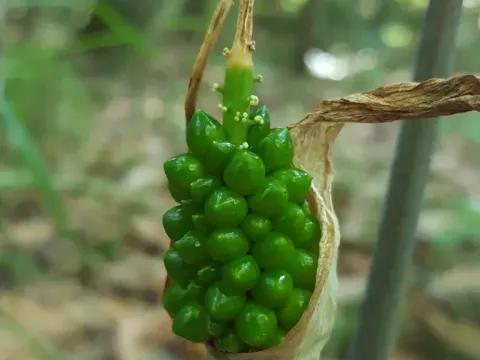
Arisaema
Arisaema
Planting Arisaema tubers in the garden is best done in early spring once the soil has warmed up to at least 12 degrees Celsius. Select a location that is sheltered from strong winds and intense midday sun.
What the section contains
Arisaema
The tubers should be planted at a depth of 10 to 15 centimeters. Ensure the growing bud, which often resembles a small protrusion, is pointed upwards to facilitate emergence.
Seeds can be sown immediately after harvest or kept for spring, but they often require a period of cold stratification. Germination can be slow, sometimes taking more than one growing season.
Vegetative propagation via offsets is the most reliable method for home gardeners. Offsets can be carefully separated from the parent tuber during the dormant winter period.
Space the plants approximately 25 to 30 centimeters apart. Proper spacing allows for adequate root development and ensures that each plant receives sufficient nutrients from the soil.
Arisaema belongs to the Araceae family and thrives in woodland environments. It prefers partial to full shade, imitating its natural habitat in the forests of Asia and North America.
The soil must be rich, moisture-retentive, yet exceptionally well-draining. Incorporating leaf mold, compost, and coarse sand into the planting hole is highly recommended for optimal growth.
Consistent moisture is crucial during the growing season. However, once the leaves begin to yellow in late summer, watering should be reduced to help the plant transition into dormancy.
In regions where temperatures drop significantly below freezing, Arisaema is typically lifted from the ground in autumn. The tubers are stored in a cool, dry place until spring planting.
The plant benefits from a light layer of organic mulch, such as shredded bark or leaf litter. This helps maintain soil temperature and moisture levels throughout the hottest summer months.
The primary threat to Arisaema is rot caused by excessive soil moisture, particularly during the dormant season. Ensuring the drainage is perfect is the best defense against fungal decay.
Slugs and snails are major pests that feed on the foliage, often causing significant aesthetic damage. Use bait or physical barriers around the perimeter of the planting area to deter them.
Aphids might cluster on the undersides of the leaves or near the developing inflorescence. A gentle stream of water or insecticidal soap can be used to control minor infestations.
Voles and other small mammals may occasionally feed on the tubers during winter storage. Storing tubers in wire-mesh crates can help protect them from burrowing pests.
To keep the plants healthy, avoid over-fertilizing with high-nitrogen products, which can make the tissue softer and more susceptible to bacterial infections.
Harvesting for winter storage occurs when the foliage naturally dies back in autumn. This indicates that the tuber has successfully stored energy for the following season.
Lift the tubers carefully with a garden fork, being mindful of the roots. Clean away excess soil and allow the tubers to air-dry in a cool, shaded area for several days.
Once dried, inspect each tuber for signs of rot or injury. Discard any specimens that appear soft or have dark, mushy spots to prevent the spread of disease.
Store the clean, healthy tubers in a breathable container filled with slightly damp peat moss or perlite. This prevents the tubers from dehydrating while keeping them cool.
Regularly check the storage boxes throughout the winter. If any moisture buildup or mold appears, improve ventilation immediately to ensure the health of the collection.