
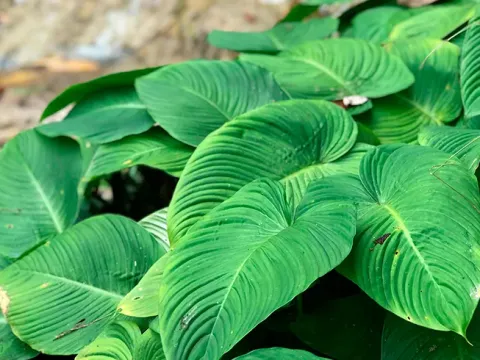
Anubias
Anubias Schott
Anubias (Anubias) belongs to the Araceae family. These are perennial herbaceous plants native to the tropical forests and wetlands of Western and Central Africa.
What the section contains


Anubias
Botanically, they are characterized by creeping rhizomes and leathery, durable leaves. Their slow growth rate makes them a popular choice for stable environments where hardy vegetation is required.
This crop prefers low to moderate light levels. Excessive light promotes algal growth on the thick leaf surfaces, which restricts photosynthesis and can lead to the decline of the plant.
Ideal cultivation temperatures range from 22 to 28 degrees Celsius. Stability is paramount; the plant performs best when water chemistry and temperature parameters are kept consistent over time.
The agrotechnical approach involves attaching the rhizome to hardscape elements like driftwood or rockwork. Burying the rhizome in dense substrate often leads to decay and necrosis.
The primary threat is rhizome rot, which typically stems from poor water circulation or burying the rhizome too deeply within the substrate, leading to oxygen starvation.
Leaves are susceptible to epiphytic algae, including black brush algae (BBA), which settle on the slow-growing foliage when nutrient levels are out of balance or lighting is excessive.
Nutrient deficiencies, particularly involving iron and potassium, often present as leaf chlorosis or pinhole formation, necessitating careful fertilization management.
Invertebrates such as certain snail species may graze on emerging leaves, causing structural damage that leaves the plant vulnerable to secondary bacterial infections.
Effective management includes maintaining optimal water parameters, ensuring correct positioning on the substrate, and avoiding sudden environmental shifts that trigger plant stress.