
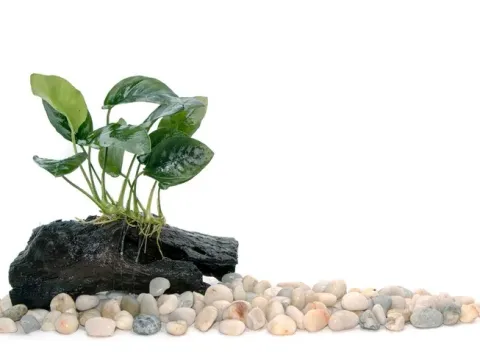
Anubias
Anubias
Anubias is a genus of perennial herbaceous aquatic plants belonging to the Araceae family. Native to the tropical regions of Central and Western Africa, these plants are typically found in shaded riverbanks, swamps, and rainforest streams, where they thrive in high humidity and semi-submerged conditions.
What the section contains


Anubias
Botanically, Anubias is distinguished by its thick, creeping rhizomes and tough, leathery leaves. These leaves are covered with a protective cuticle that prevents water loss and helps the plant withstand moderate variations in flow and water levels in its native habitats.
Successful cultivation requires stable water temperatures between 22 and 28 degrees Celsius. Unlike many other aquatic crops, Anubias prefers low to moderate light conditions, as excessive light promotes the growth of algae on its slow-growing, resilient leaves.
The substrate for Anubias should allow for proper water circulation. It is highly recommended to attach the rhizome to hardscape elements like driftwood or rocks rather than burying it directly into the substrate, which helps prevent rotting of the root system.
Anubias is widely used in the professional aquarium trade for its decorative value and durability. Its ability to grow in various lighting conditions and its resistance to most herbivorous fish make it a staple in aquascaping projects globally.
The most significant threat to Anubias health is the infestation of algae, particularly black beard algae and diatoms. These organisms quickly colonize the slow-growing leaves, effectively blocking photosynthesis and leading to the eventual decline of the plant.
Rhizome rot is a common bacterial infection that usually occurs due to poor cultural practices. When the rhizome is buried too deeply in the substrate, it loses access to oxygen, leading to necrosis and the rapid spread of decay throughout the plant.
Pests are relatively uncommon for this plant, but certain species of aquatic snails can damage young shoots. Proper quarantine procedures when introducing new specimens into a tank help in minimizing the risk of spreading harmful pests.
Nutrient deficiencies, specifically a lack of potassium or iron, often manifest as leaf yellowing or stunted growth. To maintain vibrant foliage, periodic supplementation of liquid fertilizers is necessary to provide the required micronutrients.
Poor water quality and inadequate flow create conditions that favor the development of pathogens. Maintaining a stable environment with consistent filtration is the best defense against fungal and bacterial issues that threaten the structural integrity of the plant.