
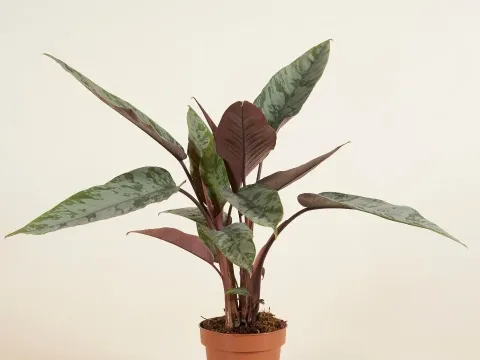
Apoballis
Apoballis Schott
Apoballis is a genus of flowering plants within the Araceae family. These plants are native to the tropical rainforests of Southeast Asia, where they thrive in shaded and humid environments.
What the section contains

Apoballis
To cultivate these plants successfully, one must replicate their natural tropical habitat. They require consistent warmth, ideally kept between 20 and 26 degrees Celsius, and are highly sensitive to frost or cold drafts.
A well-draining soil mix is essential for the health of the root system. Using a combination of peat moss, perlite, and pine bark creates the necessary aeration while retaining sufficient moisture for healthy growth.
Bright, indirect light is preferred for most species to maintain vibrant leaf patterns. While they are known for their shade tolerance, excessive darkness can lead to leggy stems and loss of foliage color.
Humidity management is a critical aspect of Apoballis care. In arid indoor conditions, using a humidifier or placing the plant on a pebble tray with water is recommended to keep the environment close to their native tropical range.
The primary concern for Apoballis plants is root rot, typically caused by overwatering or poor drainage. Once the roots begin to decay, the plant often struggles to recover, making prevention through controlled irrigation vital.
Spider mites are a major pest issue in indoor environments, especially during winter months when household air becomes dry. Regular inspection of the undersides of the leaves can help detect infestations early.
Scale insects and mealybugs may also infest the plant, hiding in leaf axils and along the stems. These pests weaken the plant by extracting sap and can leave sticky residues that promote sooty mold growth.
Fungal leaf spot diseases can occur if water remains on the foliage for extended periods in low-light conditions. Ensuring good air circulation helps to reduce the risk of such infections.
Integrated pest management, including isolation of new plants and periodic cleaning of foliage, is the most effective way to prevent widespread health issues and maintain the aesthetic quality of the plant.