
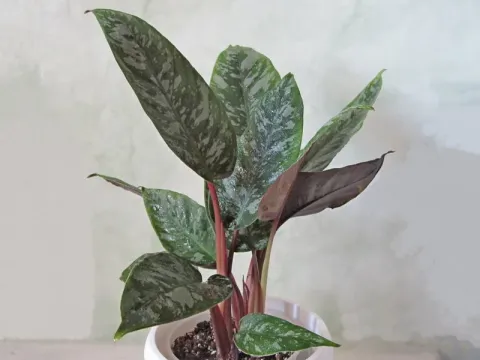
Apoballis
Apoballis
Apoballis is a genus of herbaceous perennials within the Araceae family. Native to the tropical rainforests of Southeast Asia, particularly Borneo and Sumatra, these plants thrive in humid environments where they are sheltered from direct sunlight by the forest canopy.
What the section contains

Apoballis
For successful cultivation, the climate must be kept warm and stable, ideally between 20°C and 28°C. The plant is notoriously sensitive to sudden temperature fluctuations and cold drafts, which can cause significant stress and leaf drop in mature specimens.
The substrate must be well-draining, airy, and rich in organic matter to mimic the natural forest floor. A high-quality mix typically includes peat, shredded bark, perlite, and a small amount of charcoal to keep the growing medium fresh and prevent compaction.
Humidity is the most important factor for maintaining healthy foliage, requiring levels of at least 65% to 70%. In dry indoor conditions, using pebble trays or humidifiers is essential to prevent the tips of the leaves from browning and becoming brittle.
Light levels should be kept in the bright, indirect range. While the plant is shade-tolerant, the unique variegation and vibrant patterns of the leaves require sufficient light to persist; too little light will cause the plant to lose its characteristic color and shape.
Spider mites are the most persistent pest for Apoballis, especially in environments where air humidity drops. These pests damage the foliage by piercing the cells, leading to a speckled, pale appearance on the leaves that significantly degrades the plant's health.
Root rot is a common fungal threat caused by overwatering and poor drainage. Once the roots begin to decay, the entire plant system is compromised, making it vital to ensure the soil is allowed to dry slightly between watering intervals to maintain oxygen levels at the root zone.
Mealybugs can infest the leaf axils and the undersides of the foliage, where they feed on sap. They are difficult to detect early, so regular inspections are required, especially when introducing new plants into a collection to prevent the spread of the infestation.
Fungal leaf spot diseases may appear if there is inadequate airflow around the plant or if moisture lingers on the foliage for too long. Improving ventilation and avoiding overhead watering helps to mitigate these issues and keeps the leaves clean and pathogen-free.
Viral infections may manifest as irregular yellowing or distorted leaf growth. Since these conditions are generally incurable, the primary management strategy involves sanitation and the immediate isolation or removal of affected plant parts to protect the rest of the crop.