
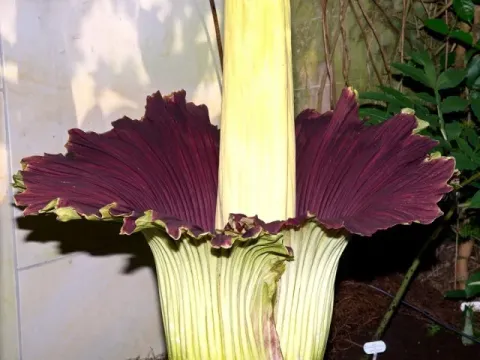
Amorphophallus gigas
Amorphophallus gigas
Amorphophallus gigas is a prominent member of the Araceae family, native to the tropical rainforests of Sumatra, Indonesia. This plant is renowned for its massive, singular leaf and its spectacular, large inflorescence that emerges from a subterranean corm.
What the section contains
Amorphophallus gigas
To cultivate this species successfully, one must replicate its natural humid habitat. It demands consistent warm temperatures, ideally between 22°C and 30°C, and requires high humidity levels that rarely drop below 70%, making greenhouse conditions almost mandatory.
The growing medium must be highly porous and rich in organic matter. A mix containing peat moss, pine bark, and perlite is often utilized to ensure that the corm remains aerated while retaining sufficient moisture to support the plant's rapid growth phase.
Light requirements for Amorphophallus gigas are specific: it thrives in filtered light or partial shade. Exposure to intense direct sunlight can lead to severe dehydration and leaf scorch, as the plant is adapted to the dim light of the jungle floor.
The plant serves primarily as a centerpiece in botanical research and rare plant collections. Its growth cycle, alternating between a vegetative phase with a large leaf and a dormant phase, requires precise management of irrigation and temperature inputs.
The most critical threat to Amorphophallus gigas is soft rot, often caused by pathogenic fungi or bacteria attacking the corm. This usually occurs when the soil is too wet or lacks proper drainage, leading to fatal hypoxic conditions for the root system.
Common household pests, such as spider mites and mealybugs, are frequent offenders in controlled environments. These pests thrive in dry air, which is why maintaining high humidity is a key strategy for integrated pest management.
Root nematodes can cause significant stunted growth by interfering with the plant's ability to uptake water and nutrients. Preventing their introduction via sterile soil substrates is the most effective way to avoid this problem.
Over-fertilization can result in toxic salt accumulation, causing the sensitive root tips to die back. A conservative, slow-release fertilization program is recommended during the active growth period to promote healthy corm development.
Maintaining biological hygiene is essential. Removing dead foliage after the senescence period is crucial to prevent the spread of fungal spores that could otherwise infect the dormant corm during the upcoming season.