
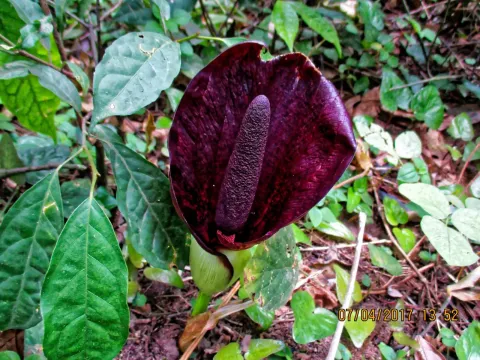
Amorphophallus abyssinicus
Amorphophallus abyssinicus
Planting of Amorphophallus abyssinicus typically begins in spring when the soil temperature rises sufficiently to support initial growth. In tropical regions, this coincides with the start of the rainy season to ensure optimal establishment.
What the section contains
Amorphophallus abyssinicus
Propagation is achieved either through seeds or vegetatively using corm offsets. Seed sowing requires a light, well-draining substrate and consistent temperatures between 22 and 25 degrees Celsius to trigger germination.
Field selection is critical; the area must have excellent drainage to prevent tuber rot. The depth of planting usually ranges from 10 to 15 centimeters depending on the size of the corm.
Proper spacing between plants is essential for air circulation, which prevents the build-up of moisture around the base of the plant and reduces the risk of fungal infections.
In containerized systems, it is vital to respect the plant's dormant phase, keeping the substrate dry until the new growing cycle initiates.
Amorphophallus abyssinicus is a member of the Araceae family, originating from African savannas and open woodland areas. It is a tuberous perennial that demands specific environmental conditions to thrive.
The plant prefers fertile, loamy soils with a neutral pH. Due to its adaptation to seasonal environments, the soil structure must allow for efficient water drainage to prevent the tuber from sitting in saturated ground.
Warm temperatures are non-negotiable for this species, with the ideal range being 25–30 degrees Celsius. Exposure to temperatures below 15 degrees can stunt growth or lead to irreversible tissue damage.
Moderate light is required; while it can handle high light, shade during the hottest parts of the day is often beneficial in cultivation to protect the foliage from scorching.
Water management is the most important factor in its care. Irrigation should be heavy during active leaf growth and completely discontinued once the foliage begins to senescence.
Bacterial rot is the most serious threat to Amorphophallus abyssinicus, primarily caused by waterlogged soil conditions. Once pathogens like Erwinia infiltrate the corm, the structure can collapse within days.
Common pests include spider mites and thrips, which are particularly problematic in greenhouse environments with low humidity. These pests feed on the sap and significantly reduce the plant's vigor.
Mealybugs are another potential nuisance, hiding in the leaf axils or under the corm scales. Systematic application of insecticides is often necessary to control these populations.
Preventive strategies involve strict monitoring of soil moisture, regular air exchange, and the use of healthy, disease-free planting material. Quarantine of new stock is highly recommended.
Sanitation of tools and the surrounding environment helps in controlling the spread of disease, especially during the harvest and division processes.
Harvesting of the corms occurs once the aerial foliage has completely withered and died back. This indicates that the energy cycle of the plant is finished and all nutrients are stored in the corm.
Care must be taken during excavation to avoid physical damage to the corm's skin. Any cut or bruise can serve as an entry point for post-harvest pathogens that degrade the crop during storage.
Post-harvest treatment involves drying the corms in a shaded, well-ventilated area to heal any surface wounds and to adjust the moisture content of the outer layers.
Storage should be maintained in cool, dry conditions with temperatures around 10–15 degrees Celsius. Regular inspection is required to ensure no rotting develops among stored tubers.
The tubers are valued for their starch content, making them a niche but important agricultural product in specific regions for food processing and industrial applications.