
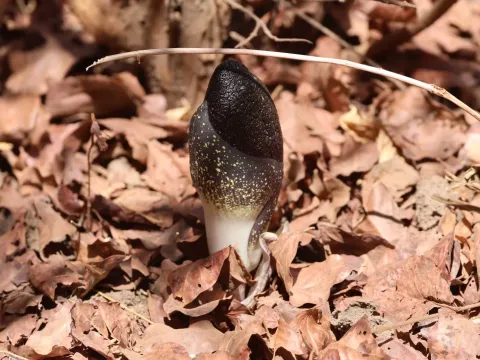
Amorphophallus aphyllus
Amorphophallus aphyllus
Amorphophallus aphyllus is a distinctive member of the Araceae family, native to the arid tropical regions of West Africa, primarily found in Senegal and Guinea.
What the section contains
Amorphophallus aphyllus
The plant is biologically characterized by its ephemeral growth habit, where it blooms while completely leafless, an evolutionary adaptation to survive the harsh dry seasons of its natural habitat.
Cultivation requires a strict regime of a warm, wet growth period followed by a long, dry, and cool dormant period to mimic the environmental conditions of the African savanna.
The growing medium must be porous and well-draining, typically consisting of a mix of sand, perlite, and organic material, as the tuber is highly susceptible to rot if moisture levels remain too high.
In terms of agricultural management, success depends on precisely identifying when the plant transitions into dormancy, at which point watering must be withheld completely to allow the tuber to harden.
Bacterial soft rot represents the most significant threat to this culture, often triggered by waterlogging or high humidity levels combined with cooler temperatures during the growth phase.
Spider mites are common pests that thrive in the dry conditions required for the plant's dormancy, often necessitating careful monitoring and humidity control.
Mealybugs can infest the emerging stalks, draining essential nutrients and weakening the plant's potential for successful blooming in the following season.
Fungal pathogens such as Fusarium can attack the base of the tuber during storage if proper hygiene and drying protocols are not followed before replanting.
Preventative measures include using sterilized substrates and ensuring proper air circulation around the tubers during their dormant period to prevent pathogenic development.