
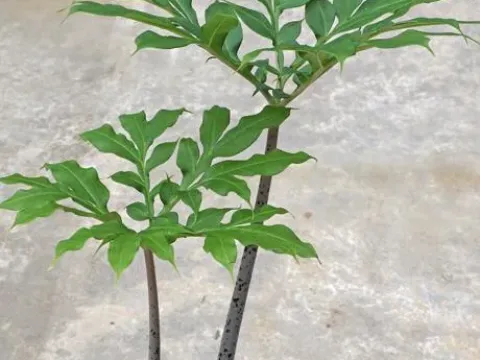
Amorphophallus asterostigmatus
Amorphophallus asterostigmatus
Amorphophallus asterostigmatus is a perennial herbaceous plant belonging to the Araceae family. It is characterized by a prominent underground tuber that functions as a crucial storage organ.
What the section contains
Amorphophallus asterostigmatus
The species is native to the tropical regions of Southeast Asia. In its natural habitat, it thrives in shaded forest floors where organic matter accumulates and soil moisture remains consistent.
Successful cultivation requires a stable tropical climate with temperatures generally ranging between 22°C and 28°C. Avoiding thermal shock is essential for healthy tuber development.
The growing medium must be highly porous, well-draining, and rich in organic nutrients. Loam-based mixes with added perlite or bark are typically ideal for optimal root aeration.
This crop follows a distinct dormancy cycle. During the dormant season, when the foliage dies back, the tuber requires a resting period with significantly reduced irrigation to prevent decay.
The primary threats to this species include fungal pathogens, particularly those causing soft rot. These often arise due to excessive soil moisture and poor ventilation in the growing environment.
Bacterial diseases can compromise the integrity of the tuber rapidly. Management involves maintaining sterile conditions and ensuring that no mechanical damage occurs during handling or storage.
Pests such as spider mites and scale insects frequently infest the petioles, especially in environments where air humidity is not sufficiently maintained throughout the growing season.
Root-knot nematodes present a risk when using recycled substrates. Proper soil sterilization and crop rotation practices are mandatory for large-scale or repeated cultivation.
Proactive monitoring of the leaf surface and the soil line is necessary to identify early signs of stress or infestation, allowing for prompt chemical or mechanical intervention.